

Lucknow. Updated on : Wednesday, 24 June 2026
As unpredictable weather patterns and severe heatwaves intensify in 2026, polyhouse farming in Uttar Pradesh has rapidly shifted from a luxury agricultural experiment into an essential climate-survival strategy. Backed by the UP state government’s aggressive push for “Market-Linked Farming,” protected cultivation has evolved into a multi-billion rupee industry.
For farmers aiming to capture premium urban markets in Lucknow, Kanpur, and the Delhi-NCR region, modern greenhouse systems offer unprecedented security. However, transitioning from traditional open-field farming to structured greenhouses requires navigating steep investment tiers, digital policy shifts, and strict regulatory guidelines.
The Reality of Investment: Breaking Down the 2026 Costs
Setting up a polyhouse is no longer a “one-size-fits-all” financial estimate. In 2026, polyhouse technology tiers are clearly defined by their ability to handle UP’s increasingly extreme climate zones:
2026 Polyhouse Cost per Acre in Uttar Pradesh
| Polyhouse Type | Cost per Acre (Approximate) | Best For |
| Naturally Ventilated (NVPH) | ₹32 Lakh – ₹45 Lakh | Off-season cucumbers, tomatoes, and capsicum. |
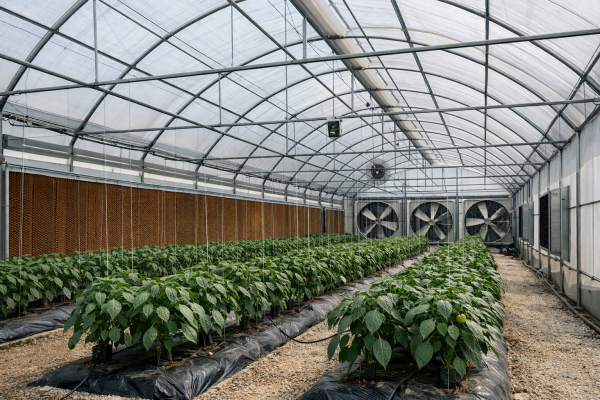
| Fan & Pad (Medium-Tech) | ₹60 Lakh – ₹75 Lakh | High-value floriculture (Gerbera, Lilium) and Dutch Roses. |
| Hi-Tech IoT-Enabled | ₹85 Lakh – ₹1.2 Crore | Exotic medicinal plants and export-quality strawberries. |
The Truth About ROI and Operational Costs
While early agricultural guides frequently promised a quick 1-year recovery window, current 2026 market data indicates a realistic 2.5 to 3.5-year Return on Investment (ROI).
This extended payback period accounts for an 18% GST framework on construction materials and the escalating costs of inputs. High-quality, hybrid climate-resistant seeds can now cost up to ₹15 per individual seed. Furthermore, under newly enforced guidelines, accessing inputs and tracking direct financial transactions require valid documentation; ensure you are up to date on the mandatory UP Farmer ID requirements.
Government Subsidies: How to Get 50% Back Online
The National Horticulture Mission (NHM) and the Mission for Integrated Development of Horticulture (MIDH) remain the financial backbone for protected cultivation in UP. However, the administrative landscape has shifted completely away from physical paperwork to the digital UP Horticulture DBT Portal.
To successfully claim your 50% capital subsidy without disqualification, you must follow a rigid procedural sequence:
The Strict Procedural Timeline
The “Letter of Intent” Rule: Do not clear land or purchase a single steel pipe before receiving your official, digital Letter of Intent (LOI) through the portal. Beginning construction prematurely is a common mistake that permanently disqualifies farmers from state financial aid.
Credit-Linked Subsidy Structure: The 2026 framework mandates that schemes require a formal bank loan covering at least 25% of the total project cost. The government releases the subsidy directly to the bank loan account only after a successful physical verification.
Joint Digital Inspection: Once construction finishes, a joint inspection team led by the District Horticulture Officer (DHO) verifies the structure’s structural dimensions and uploads geotagged images directly to the DBT portal.
Top-up Opportunities: Western UP farmers can tap into additional state-specific solar subsidies to power the electrical requirements of “Fan and Pad” systems, reducing monthly power utility costs by up to 40%. Agro-entrepreneurs scaling up these setups into comprehensive agritech businesses can explore broader state funding pools through the Uttar Pradesh Startup Policy initiatives.
The Profitable Crop Matrix for UP Mandis
Proximity to key “Mandi” hubs dictates crop selection. For optimal profitability, align your cultivation cycles with these distinct geographical demand pockets:
Western UP (Meerut, Saharanpur): Target the massive Azadpur Mandi in Delhi. Focus your polyhouse space on high-demand Indeterminate Tomatoes and Colored Capsicum (Bell Peppers).
Central UP (Lucknow, Kanpur): Target the premium wedding, corporate, and event industry in the state capital. Prioritize high-value floriculture like Dutch Roses and Lilium.
Eastern UP (Varanasi, Prayagraj): Focus on maximizing high-yield Seedless Cucumbers to fulfill strict quality contracts with local luxury hotel chains and modern retail stores.
Critical Challenges Facing Farmers in 2026
Despite high earning potential, polyhouse ventures face severe operational risks if managed using traditional open-field mentalities:
The Heat Barrier: In arid districts like Jhansi, Agra, or Prayagraj, naturally ventilated structures struggle to maintain viable internal temperatures during peak summer months. Multi-layered internal thermal screens and high-pressure automated fogger systems are now absolute requirements to protect crop yields.
The Technical Skill Gap: Greenhouse agronomy requires precise control over nutrient electrical conductivity (EC), pH levels, and humidity balance. Traditional farming methods do not translate directly to success here. Farmers should attend the 2-day certified technical training courses provided at local Krishi Vigyan Kendras (KVKs) or the Indian Institute of Vegetable Research (IIVR) in Varanasi before investing capital.
Frequently Asked Questions (FAQ)
1. Can I apply for the UP polyhouse subsidy offline?
No. In 2026, all subsidy applications under the National Horticulture Mission must be routed through the official UP Horticulture DBT portal. Physical applications are no longer accepted.
2. What happens if I build the polyhouse before the LOI is issued?
Your application will be rejected. The guidelines clearly state that any construction activity started before the official issuance of the digital Letter of Intent (LOI) forfeits all eligibility for capital subsidies.
3. Which polyhouse type is ideal for Western UP weather?
While Naturally Ventilated structures work well for winter crop cycles, a Medium-Tech Fan and Pad polyhouse is recommended if you intend to cultivate high-value bell peppers or flowers during intense summer heatwaves.
Disclaimer
The information provided in this article regarding polyhouse setup costs, market dynamics, and Uttar Pradesh government subsidy programs is for general educational and awareness purposes only. Financial numbers, seed costs, and specific subsidy disbursement policies fluctuate based on departmental revisions, localized raw material costs, and active state allocations. Farmers and agricultural investors must verify current guidelines directly on the official UP Horticulture portal before executing financial agreements.
