 Matribhumi Samachar English


New Delhi. Monday, 11 May 2026
The landscape of employment in India has undergone a seismic shift in 2026. As the traditional job market evolves, the Central and State Governments have pivoted toward a “Skills-First” and “Entrepreneurship-Led” economy. This transition is designed to tackle unemployment by transforming young Indians from job seekers into specialized professionals and job creators.
With the integration of AI, the expansion of green energy, and the democratization of credit, the government is building a robust infrastructure for self-reliance.
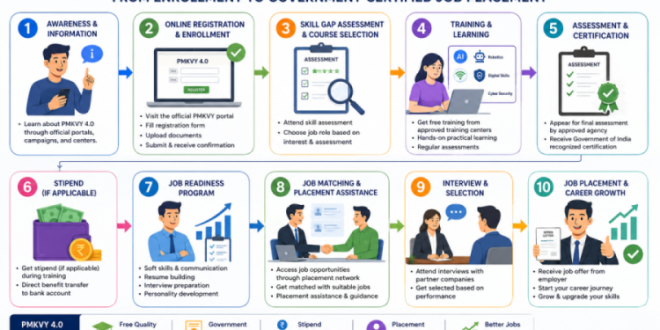
1. PMKVY 4.0: Mastering the “Industry 4.0” Skillset
The Pradhan Mantri Kaushal Vikas Yojana (PMKVY 4.0) has been re-engineered to meet the demands of a high-tech global economy. In 2026, the focus has moved away from basic manufacturing toward advanced digital and physical technologies.
-
Key Training Modules:
-
Artificial Intelligence (AI) & Machine Learning: Developing algorithms and data modeling.
-
Electric Vehicle (EV) Technology: Battery management systems and EV maintenance.
-
Drone Operations: From agricultural spraying to logistics and mapping.
-
Cyber Security: Protecting national and corporate digital infrastructure.
-
-
The Benefit: Participants receive NSQF-aligned certifications, which are now globally recognized, facilitating international labor mobility.
2. PM Internship Scheme 2026: Direct Corporate Exposure
Bridging the “Experience Gap” is the primary goal of the expanded PM Internship Scheme. It targets fresh graduates and those with basic schooling to give them a foothold in India’s top 500 companies.
-
Financial Support: Interns receive a monthly stipend (approx. ₹9,000), shared between the government and the host company.
-
Target Demographics: Focus is placed on youth aged 21–24 who have completed Class 10, 12, or Graduation but remain unemployed.
-
Impact: Over 10 million youth are expected to benefit over a five-year period, gaining certificates that act as a “passport” to full-time roles.
3. Fueling Ambition: PMEGP and Mudra Loans
For those with a business mindset, 2026 offers unprecedented financial access without the traditional requirement of heavy collateral.
-
PMEGP (Prime Minister’s Employment Generation Programme):
-
Manufacturing Sector: Loans up to ₹50 lakh.
-
Service Sector: Loans up to ₹20 lakh.
-
Subsidy Structure: A significant “back-ended” subsidy (15% to 35%) means a large portion of the loan is essentially a grant provided by the government.
-
-
Pradhan Mantri Mudra Yojana (PMMY):
-
Designed for the “missing middle,” Mudra loans support micro-enterprises like tech repair shops, boutique food processing, and digital service centers.
-
4. State-Specific Initiatives: Decentralized Growth
States like Uttar Pradesh, Bihar, and Madhya Pradesh have launched localized portals that sync with the National Career Service (NCS).
-
Startup India Hubs: New incubation centers have been established in Tier-2 and Tier-3 cities to ensure that innovation isn’t restricted to metros like Bengaluru or Gurgaon.
-
Women-Centric Schemes: Many states now offer an additional 5% interest subvention for women entrepreneurs under self-employment categories.
5. Crucial Safety & Application Tips
To ensure you benefit from these schemes without falling into traps, follow these guidelines:
-
Official Portals Only: Always use
.gov.inor official state domains. -
No Middlemen: Government schemes like Mudra and PMKVY do not require “commission” payments to third parties.
-
Documentation Ready: Ensure your bank account is linked to your mobile and your Aadhaar is updated (Note: Never share your [Aadhaar Redacted] digits with unofficial sources).
-
Skill-First Approach: In 2026, a certificate in a “niche” skill (like 3D printing) is often more valuable than a general degree.
Expert Insight: “In 2026, the ‘job for life’ concept is being replaced by ‘skills for life.’ The youth who leverage these government-funded digital certifications and low-interest capital today will be the leaders of India’s $5 trillion economy tomorrow.”
Relevant Links & Resources
For more detailed updates on regional schemes and success stories, visit:
Disclaimer
Decisions regarding business loans (Mudra/PMEGP) involve financial commitments and interest obligations. Users are advised to consult with bank officials or certified financial advisors to understand the terms of repayment and legal liabilities.