

Mumbai. Updated on : Wednesday, 24 June 2026
Artificial intelligence has officially transitioned from basic software configurations and experimental chat interfaces into core infrastructure. Around the world, companies, governments, and investors are accelerating spending on digital transformation, cementing AI as a pillar of geopolitical leverage and economic growth.
This week’s developments highlight a clear global shift: AI is moving rapidly beyond pilot projects into everyday workflows, rewriting business models across every major industry.
1. Enterprise AI Adoption Enters a High-Skill Premium Phase
Organizations are moving past simple experimentation to integrate artificial intelligence solutions across customer service, logistics, marketing, and business analytics. This structural evolution is driving immense productivity gains and reducing operational friction, but it has fundamentally altered the talent market.
The traditional era of low-complexity, manual software coding assembly is rapidly transitioning into a “skill-premium” market. To implement reliable enterprise pipelines, companies are aggressively competing for specialized professionals, sending high-value tech career paths into overdrive.
2. Global AI Infrastructure Spending Explodes
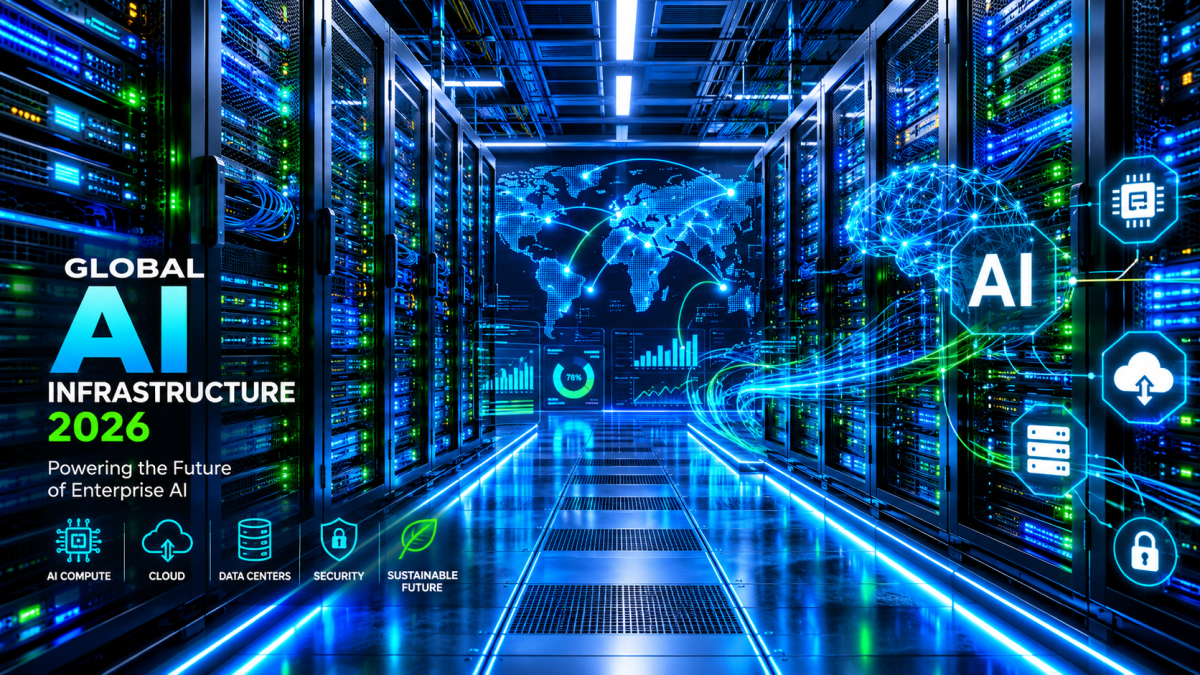
The physical race for technological dominance is no longer won on software alone; it is heavily dictated by physical compute capacity. Cloud providers, semiconductor manufacturers, and infrastructure operators are funneling billions into high-performance computing assets.
Key areas driving massive capital injection include:
Advanced Graphics Processing Units (GPUs) and dense parallel processing chips.
Next-Gen Gallium Nitride (GaN) Technology to reduce energy loss in high-voltage hardware operations.
Hyper-dense, liquid-cooled data center networks equipped to handle relentless matrix calculations.
This hardware boom is opening lucrative avenues across telecommunications, energy generation, construction, and electronics manufacturing.
3. Data Centers Become Strategic Assets and Sovereign Bedrocks
Modern data centers are no longer just storage facilities—they are emerging as critical national infrastructure. To keep sensitive data domestic and avoid volatile international regulatory shifts, nations are spearheading independent frameworks.
India, for instance, has firmly committed to this paradigm shift. Backed by a robust government budgetary allocation exceeding ₹10,371 crore, the state-backed initiative is transforming how localized AI ecosystems are built. Rather than relying on foreign cloud providers, the focus has shifted heavily to creating independent, high-performance physical computing hubs. To read an in-depth analysis of this architectural shift, explore The Sovereign AI Rise: How India is Engineering Its Independent Digital Backbone.
Beyond national initiatives, major commercial partnerships—such as the Meta-Reliance 168-megawatt AI data facility in Jamnagar, Gujarat—are scaling up in tandem with state policies to ensure robust, industrial-scale compute capability.
4. Sustainability and “Green Compute” Policies Take Center Stage
Because deep learning models require continuous, high-density power, the strain on global energy grids has brought sustainability to the forefront. Green data centers and energy-efficient architectures are becoming crucial competitive advantages for modern enterprises.
Regulatory authorities are responding with highly targeted regional policies. For instance, Indian states are implementing dedicated Green Integrated Data Centre Policies to balance massive technological growth with stringent carbon footprint and water usage reductions.
5. How AI is Transforming Search and Digital Publishing
Artificial intelligence is completely redefining how users discover information online. The rise of AI-generated answers has prompted publishers to pivot away from low-value, generic content. Instead, to maintain visibility in modern search landscapes, digital creators are focusing heavily on:
High-quality original reporting and expert-driven content.
In-depth analysis that AI cannot replicate without firsthand evidence.
Building trustworthy, user-focused informational experiences.
6. The Rise of India’s High-Tech Tech Ecosystem
India is rapidly transforming its identity from an off-shore software outsourcing hub into a global architect of advanced deep-tech systems. By combining its foundational Digital Public Infrastructure (DPI) with sovereign initiatives, the ecosystem is creating tailored solutions that global, Western-centric models often miss.
A prime example is the BHASHINI framework, which builds localized data systems to bridge the country’s vast multilingual barriers. This allows citizens to seamlessly interact with public services regardless of literacy or regional dialects. Simultaneously, geographic diversification is occurring rapidly within the country. While cities like Bengaluru and Hyderabad remain tech powerhouses, states like Uttar Pradesh are stepping up with aggressive skilling mandates and the establishment of new tech hubs. To learn more about how regional tech corridors are scaling up, read Silicon, Skills, and Sovereignty: Inside the Massive Uttar Pradesh AI Revolution of 2026.
Emerging Industry Trends to Watch
Sovereign AI Frameworks: More countries will look to establish independent digital backbones to maintain algorithmic and data self-determination. For a comprehensive look at how these frameworks function as a public utility, check out The Rise of Sovereign AI in India: Building a Self-Reliant Digital Backbone.
The Rise of High-Value Engineering Careers: Demand is soaring for hardware-software integration specialists. Roles like AI Infrastructure Engineers, Semiconductor Process Engineers, and AI Safety Specialists are witnessing unprecedented salary premiums. To view the complete breakdown of these opportunities, see The Silicon and AI Revolution: 10 High-Value Engineering Careers Exploding in India.
Human-Centric Tech Philosophy: Following global forums like VivaTech 2026, the push is toward making AI an affordable “all-inclusive” equalizer that resolves daily citizen inconveniences rather than widening economic gaps. For insights into this equitable development model, read India’s AI Revolution: PM Modi Redefines Tech as “All Inclusive” at VivaTech 2026.
Frequently Asked Questions (FAQs)
What is Sovereign AI, and why does it matter to modern businesses?
Sovereign AI refers to a nation’s independent capability to develop, control, and deploy artificial intelligence using its own infrastructure, domestic datasets, and regulatory frameworks. For businesses, relying on local sovereign clouds protects them from international regulatory shifts, context drift in data, and volatile global pricing models.
How is the engineering labor market changing due to AI trends in 2026?
The market has shifted heavily toward a skill-premium model. Low-complexity software assembly is shrinking due to automated coding tools, while roles in AI hardware architecture, chip design, semiconductor equipment, and AI infrastructure management are experiencing a massive boom.
Why are standard global AI models struggling in regional markets like India?
Global models are frequently trained on Western data and languages, leading to “context drift” and subtle algorithmic biases. They often struggle with multi-dialect inputs and unique regional governance, agricultural, or healthcare nuances, making localized, indigenous foundation models a necessity.
Disclaimer
The information provided in this article is for educational and informational purposes only. Technology markets, governmental policies, and industry trends are subject to rapid evolution. Readers should consult with technology and legal experts before making major capital investments based on infrastructure or regulatory trends mentioned herein.
