

New Delhi. Monday, 15 June 2026
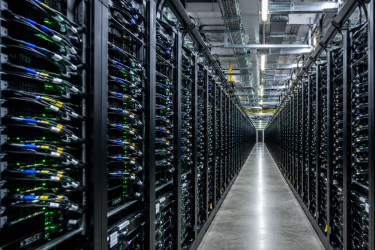
Artificial Intelligence has officially evolved past software, code, and basic chat interfaces. In 2026, the ultimate technology race centers entirely on physical compute capacity. Around the world, governments, technology conglomerates, and hyperscale cloud providers are shifting investments away from traditional data storage architectures. Instead, they are pouring hundreds of billions of dollars into what industry leaders call AI factories—hyper-specialized, large-scale facilities purpose-built to train, deploy, and operate advanced generative AI systems.
Unlike legacy data centers that primarily store files and process standard requests, an AI factory acts as an integrated computing ecosystem designed to create and serve intelligence at an industrial scale. As countries compete for digital leadership, the development of these factories is becoming as strategically vital as constructing power plants, high-speed rail networks, or national telecommunications grids.
The Architectural Blueprint: The Four Layers of an AI Factory
An AI factory is not just a building full of standard servers; it is a hyper-dense system optimized for heavy parallel processing. Structurally, a modern AI factory is divided into four distinct, tightly integrated layers:
Physical Infrastructure: The structural foundation. This includes specialized facility layouts, robust grid connectivity, and high-density power installations.
AI Computing Hardware: The physical execution engines. This layer clusters thousands of high-performance Graphics Processing Units (GPUs) and specialized AI accelerators, backed by high-bandwidth memory (HBM) and distributed scale-out storage platforms.
Software and Orchestration: The control plane. It integrates automated cluster virtualization, resource management systems, and specialized training frameworks (like PyTorch or Megatron-LM) to maximize hardware efficiency and prevent training run failures.
AI Applications and Models: The consumer-facing layer. This is where large foundation models, agentic workflows, and industry-specific enterprise AI solutions are deployed to deliver intelligent automated services.
Global Investment & The Rise of Sovereign AI
The global AI infrastructure race accelerated dramatically throughout 2026. Industry analysts note that cumulative global investments in AI-ready computing infrastructure are pacing toward trillions of dollars by the end of the decade, heavily driven by the enterprise transition toward autonomous “Agentic AI.”
However, a massive technological and political shift has altered the landscape: Sovereign AI has officially become a critical pillar of national security and economic self-determination. Rather than relying on foreign-trained AI models or volatile offshore cloud policies, nations are building domestic computing hubs to keep data, infrastructure, and algorithmic curation within their own borders.
The European Union: The EU has launched multiple AI factory initiatives explicitly tied to its high-performance computing (HPC) networks to ensure localized data compliance under the framework of the EU AI Act.
The United States: The US continues to dominate raw hyperscale capacity, constructing mega-campuses housing tens of thousands of next-generation GPUs to train bleeding-edge frontier models.
The Asia-Pacific Region: Countries across Asia are establishing local chip design and sovereign cloud networks to build localized, multilingual AI models capable of processing content in dozens of regional languages.
The Severe Energy and Cooling Bottleneck
A common misconception is that AI infrastructure can expand infinitely using traditional electrical grids. In reality, power availability has emerged as the single most critical factor determining where future AI factories are built.
Training complex deep learning models requires unprecedented electrical loads—often exceeding 100 kilowatts (kW) per rack, compared to just 5 to 10 kW for legacy cloud servers. Traditional air conditioning is entirely insufficient to manage the intense thermal outputs generated by continuous matrix variations across thousands of tightly clustered GPUs.
To resolve this issue, the global infrastructure industry in 2026 is aggressively adopting a clean energy mandate:
Advanced Liquid Cooling: Operators are rapidly replacing air-cooling fans with direct-to-chip liquid cooling and complete liquid immersion systems to radically lower the facility’s Power Usage Effectiveness (PUE).
Nuclear Energy Partnerships: Tech giants are actively signing historic power purchase agreements (PPAs) with nuclear power companies and investing heavily in Small Modular Reactors (SMRs) to guarantee zero-carbon, continuous baseload electricity.
Renewable Energy Grids: Massive facilities are being paired with utility-scale solar arrays, wind farms, and industrial battery storage units to smooth out grid intermittency.
Why AI Factories Matter for India: The Trillion-Rupee Metamorphosis
India has successfully positioned itself as the next major frontier for global AI infrastructure investment. Driven by government initiatives like the state-backed IndiaAI Mission, the nation is building out thousands of high-performance GPUs and curating open-source data repositories to foster an independent technology ecosystem.
1. Anchoring AI Sovereignty and Localized Models
Developing massive compute infrastructure locally ensures India’s cultural and linguistic self-determination. By training indigenous foundation models on datasets rich in regional languages and local cultural contexts, India eliminates the inherent biases and Western viewpoints of foreign-trained models.
2. Strategic Corporate Alliances
A massive 2026 milestone occurred when global tech leader Meta partnered with Reliance Industries to establish its first built-to-suit, AI-enabled data center footprint in India. For instance, the Meta-Reliance data infrastructure initiative in Jamnagar highlights a massive shift, aiming to utilize nearly 1 gigawatt (GW) of renewable energy resources to run sustainable, hyper-dense AI workloads. Furthermore, states are rolling out progressive localized legislation, such as Maharashtra’s new ambitious AI and data center policy, creating a highly welcoming playground for hyperscale capital.
3. Semiconductor Integration
The AI factory boom is acting as the ultimate growth engine for India’s domestic electronics assembly matrix. From events like SEMICON India to advanced partnerships with silicon pioneers, the country is actively building out its testing, packaging, and semiconductor manufacturing capabilities. Initiatives highlighting edge AI advancements, such as the validation of Netrasemi’s 12nm A2000 chip, ensure that India can build resilient, cloud-independent hardware nodes.
4. Exponential Career Transformation
The physical network expansion is drastically shifting the domestic job market, transitioning India into a primary global computing engine. Repetitive software tasks are being absorbed by autonomous co-worker agents, while high-tier roles—such as MLOps architects, Generative AI engineers, and prompt optimization experts—command premium salaries.
Future Outlook: Beyond Earth and Into the Horizon
As 2026 progresses, the AI factory market is transitioning from an experimental phase into industrialized, gigawatt-scale deployment. Researchers and private space tech firms are even exploring ambitious, early-stage concepts like space-based computing infrastructure—deploying orbital data centers to tap into zero-gravity cooling environments and direct solar exposure.
Just as traditional factories fueled the Industrial Revolution, AI factories are serving as the foundation of the global artificial intelligence economy. Nations and enterprises that build out their physical compute capacity today will hold the ultimate competitive and technological advantages tomorrow.
External References and Comprehensive Resources
To dive deeper into the technical, geopolitical, and structural shifts powering this hardware revolution, explore the official reporting and deep-dives published by Matribhumisamachar:
For an exhaustive analysis of the environmental, financial, and physical installations transforming the subcontinent, read the full report on The Backbone of the Digital Revolution and India’s AI Infrastructure Investment.
To learn how localized computing repositories, regulatory alternatives, and the state-led IndiaAI Mission function, explore Scaling Responsible Innovation: The Evolution of Global AI Governance and India’s Strategic Path.
For a comprehensive look at corporate milestones, including the historic Meta-Reliance ecosystem expansion and cultural self-determination, view The Backbone of the Digital Revolution: Unpacking India’s Sovereign AI Ecosystem and Infrastructure Boom.
To see how high-density computing clusters require autonomous design parameters, fluid dynamics loop optimization, and the rise of Artificial General Engineers, read Beyond Chatbots: The Rise of Engineering-Focused AI Systems and Artificial General Engineers (AGEs).
If you are looking to map out learning pathways, salary structures, and top tech roles created by this infrastructure boom, read The Ultimate 2026 Guide to AI Career Opportunities in India: Roles, Salaries, and Roadmap.
