

New Delhi. Monday, 15 June 2026
Artificial intelligence has officially evolved past software, code, and basic chat interfaces. In 2026, building localized systems is no longer an optional upgrade—it has become an urgent strategic and economic priority.
After redefining global fintech and digital identity through population-scale breakthroughs like UPI, Aadhaar, and DigiLocker, India is executing its most ambitious technological playbook yet: establishing a fully independent, sovereign AI strategy.
By anchoring its digital economy in local data ownership, regional linguistic fluency, and homegrown computing grids, India is changing its role from one of the world’s largest consumers of technology to one of its most influential builders.
Why a Sovereign AI Strategy is Essential for India
Relying entirely on foreign, English-centric AI architectures presents critical vulnerabilities for a rapidly growing economy. Standard global models frequently struggle to decode the multi-layered cultural context, localized idioms, and varied dialects native to the Indian subcontinent.
Furthermore, processing national data on overseas servers exposes domestic startups to volatile international regulatory shifts and unpredictable cloud pricing models. Establishing an independent AI framework allows India to protect its computational self-determination while building specialized applications tailored precisely to local governance, healthcare, and agricultural needs.
The Pillars of India’s Homegrown AI Architecture
India’s strategy spans across every layer of the modern technology stack, fueled by a powerful mix of state-directed funding and public-private industrial collaboration.
1. BharatGen: Algorithmic and Cultural Self-Determination
Led by a dedicated consortium of premier research institutions, BharatGen serves as India’s flagship initiative for linguistic diversity. Rather than overlaying translation tools on top of Western models, BharatGen builds generative text, speech, and multimodal systems from the ground up across more than 22 scheduled Indian languages. This foundational focus ensures that digital banking, personalized education, and public sector benefits are accessible to all citizens, bridging the deep English-centric digital divide.
2. The IndiaAI Mission: Democratizing Compute Infrastructure
Backed by a major public investment exceeding ₹10,000 crore, the IndiaAI Mission functions as the structural bedrock for the country’s deep-tech ecosystem. The mission systematically address the single largest bottleneck in modern machine learning: access to high-performance hardware.
The GPU Surge: India’s operational compute capacity has climbed past 38,000 GPUs distributed across specialized cloud environments.
Leveling the Playing Field: By offering subsidized, high-density processing power to early-stage developers, research labs, and universities, the mission ensures that resource-constrained innovators can train advanced neural networks without prohibitive capital requirements.
3. Hyper-Scale Data Centers and the Green Energy Push
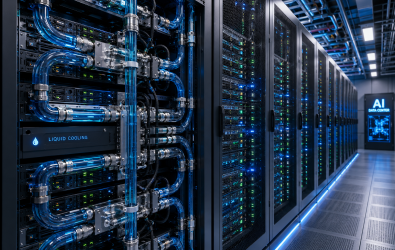
A physical computing race requires unprecedented physical infrastructure. Massive data arrays are expanding rapidly across the country, designed to support parallel-processing deep learning workloads. Private tech conglomerates are stepping up to build next-generation, liquid-cooled “AI factories” powered by renewable energy grids to support continuous, heavy-duty operational loads sustainably.
From Earth Observation to Grassroots Industries
The ripple effects of this sovereign infrastructure are transforming critical real-world sectors:
| Target Sector | Core Sovereign AI Application | Impact Dimension |
| Agriculture | Localized predictive crop indexing and soil analysis models | Enhances precision farming and climate resilience for smallholder farmers. |
| Geospatial Intelligence | AI-powered Earth observation combining satellite imagery and drone data | Optimizes national security, disaster response, and urban development plans. |
| Public Governance | Multi-dialect voice agents integrated into local administrative systems | Streamlines citizen access to welfare schemes without literacy barriers. |
Overcoming Infrastructure Bottlenecks on the Road Ahead
Despite strong momentum, maintaining global frontier competitiveness requires navigating structural hurdles. India currently faces a near-term dependence on imported AI accelerators and specialized silicon hardware.
To mitigate these supply chain risks, long-term success is closely tied to domestic semiconductor fabrication initiatives like the Semicon India Programme. Ensuring grid stability for high-density data centers and expanding specialized talent pools in MLOps and vector database management will determine how effectively India can sustain its infrastructure boom over the next decade.
Explore Deeper Coverage on Matribhumi Samachar
To better understand the economic policy shifts, public-private partnerships, and infrastructure expansions driving this high-tech transformation, review the detailed deep dives from our editorial team:
Sovereign Scale & Global Partnerships: Discover how the nation’s rising status is shaking up the global tech landscape in India Takes Center Stage as Official AI Partner Country at VivaTech 2026 in Paris.
The Computing Engine: Analyze the underlying hardware layer and data platforms supporting developers in The Backbone of the Digital Revolution: Unpacking India’s Sovereign AI Ecosystem and Infrastructure Boom.
Industrial Scale Foundations: Examine the massive energy frameworks, liquid cooling innovations, and data facilities being constructed on the ground in The Hardware Boom: Inside the Relentless AI Data Center Infrastructure Growth in India.
Private Mega-Projects: Track how leading Indian enterprises are anchoring infrastructure on domestic soil in Reliance Industries’ Massive Shift: Powering India’s AI Infrastructure and Sovereign Compute Capabilities.
