

Lucknow. Saturday, 20 June 2026
The economic geography of North India is shifting at an unprecedented pace. No longer viewed simply through an agricultural lens, Uttar Pradesh (UP) has actively engineered its identity into India’s premier logistics, rapid transit, and high-tech industrial powerhouse. Driven by highly proactive state industrial policies, massive capital allocation, and an expanding ecosystem for deep-tech industries, the state is moving aggressively toward its ambitious target of becoming a trillion-dollar economy.
At the heart of this massive transition is a physical and digital connectivity matrix that links manufacturing clusters directly to international export gateways. Let’s look closer at the key pillars driving the Uttar Pradesh infrastructure revolution.
The Central Nervous System: Fusing Cities with Rapid Transit
The state’s approach to transit is shifting away from merely expanding traditional roadways to building highly interconnected urban corridors. A prime example is the newly designated State Capital Region (SCR), designed to decentralize growth away from choked urban centers and distribute economic opportunity across adjacent districts like Unnao.
A cornerstone of this mobility shift is the proposed Lucknow-Kanpur Rapid Rail Transit System (RRTS). Operating at design speeds of 160–180 km/h, this network will cut commuting times between UP’s political capital and its primary industrial engine down to just 40 minutes. Rather than remaining separate cities, Lucknow and Kanpur are effectively fusing into a single, unified economic zone. This transit network works alongside the mega-highway development of the Lucknow–Kanpur Expressway (NE-6) to maximize supply chain efficiency and enable unparalleled labor mobility.
For a deeper architectural analysis of how this rail network affects real estate and regional employment models, read the full coverage on Redefining Central UP: The Strategic Impact of the Lucknow-Kanpur Rapid Rail Corridor.
Silicon and Sovereignty: High-Tech Manufacturing Ecosystems
The infrastructure footprint extends beyond asphalt and steel rails into semiconductor facilities, sovereign AI data complexes, and defense systems. While states like Gujarat have secured historic front-end manufacturing headlines, Uttar Pradesh is rapidly emerging as a premier destination for downstream semiconductor processing, electronic components, and advanced industrial systems.
The Symbiosis of Silicon, Aerospace, and Logistics
| Industrial Cluster / Node | Core Specialization | Primary Policy / Catalyst |
| Noida & Yamuna Expressway (YEIDA) | Semiconductors, Component Design, Edge-AI Data Centers | Semiconductor Policy / India Semiconductor Mission (ISM) 2.0 |
| Kanpur & Lucknow Axis | Defense Electronics, Aerospace Systems, Heavy Engineering | UP Defence Industrial Corridor (6 Strategic Nodes) |
| Western UP – Jewar Sector | Downstream Chip Packaging, Smartphone Assemblies | HCL-Foxconn OSAT Joint Venture Facility |
The crown jewel of western UP’s expansion is the highly anticipated HCL-Foxconn semiconductor venture located inside Sector 28 of the Yamuna Expressway Industrial Development Authority (YEIDA) zone. Targeting 20,000 wafer inputs per month, this facility focuses heavily on edge-AI controllers utilized in smartphones and automotive sectors.
By utilizing the expanding Bundelkhand and Purvanchal expressway networks, ancillary chemical suppliers and raw material manufacturers can deliver electronic components to these hubs with minimal freight turnaround times. Learn more about how the state is rewriting its high-tech hardware narrative on Silicon, Sovereignty, and Scale: How Uttar Pradesh is Rewriting Its High-Tech Manufacturing Story.
Global Gateways: Air Cargo and Multi-Modal Logistics
An infrastructure overhaul is only as strong as its connection to global markets. The imminent operationalization of the Noida International Airport at Jewar, integrated seamlessly with the Eastern Dedicated Freight Corridor (EDFC), allows manufacturers to bypass metropolitan choke points entirely.
Concurrently, the state has built out hyper-dense localized data infrastructure to run future enterprise AI models and smart automation systems on sovereign hardware, heavily protecting local enterprises from global supply shocks. For deeper insight into how these massive hardware pipelines are flipping the switch from intent to active factory operations, read the detailed investigative coverage on Silicon Sovereign: How Uttar Pradesh is Powering Up as India’s Next High-Tech Manufacturing Hub.
The Startup and MSME Buffer
To ensure that this growth remains inclusive, Uttar Pradesh is integrating its Micro, Small, and Medium Enterprises (MSMEs) into these high-tech supply chains. By providing local vendors with modern prototyping labs and digital toolkits, traditional manufacturing units in Tier-2 and Tier-3 cities like Gorakhpur, Jhansi, and Bareilly are gradually upgrading into component suppliers for larger electronic and automotive clusters. Backed by the StartInUP initiative and new regional mega-hubs (U-Hubs), the state is balancing heavy physical infrastructure with digital human capital.
Frequently Asked Questions (FAQs)
What is the primary objective of the proposed rapid rail corridor between Lucknow and Kanpur?
The primary goal is to establish a high-speed regional transit corridor that cuts commuting times down to just 40 minutes. This creates a unified economic zone, expands employment, improves labor mobility, and eases congestion on existing road networks.
How are the expressways in Uttar Pradesh supporting the tech industry?
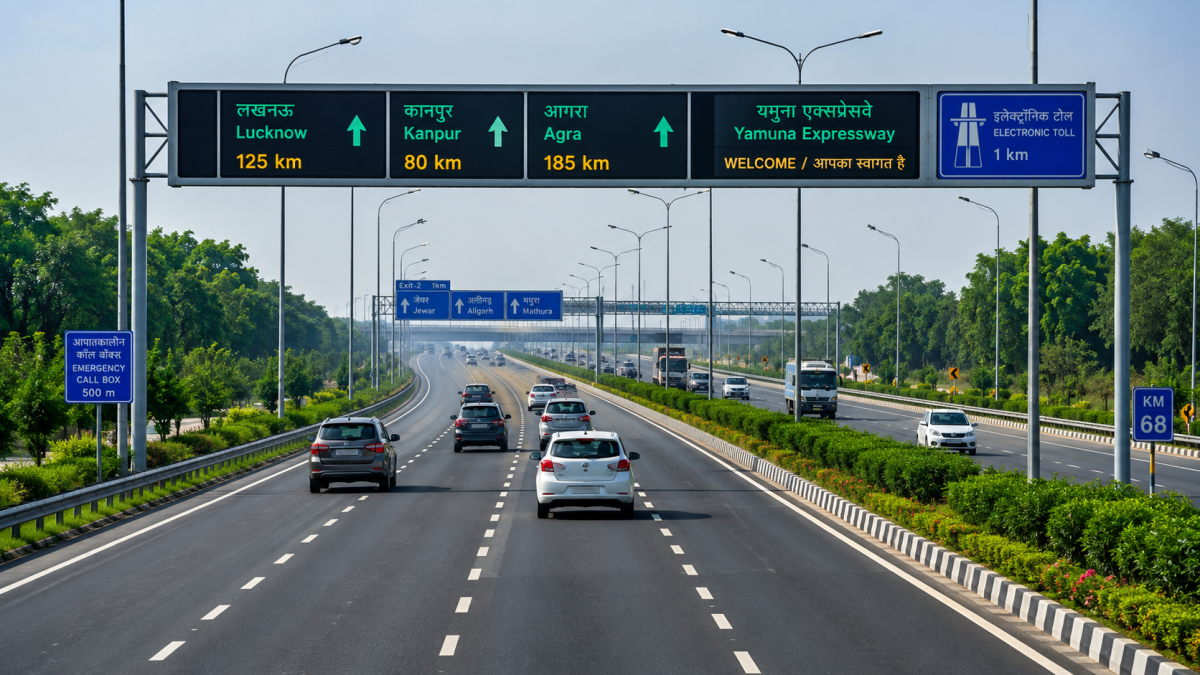
Expressways like the Yamuna, Purvanchal, and Bundelkhand networks serve as physical conveyor belts. They connect outer manufacturing expansion zones with urban markets, allowing ancillary chemical suppliers, substrate fabricators, and component manufacturers to transport materials with minimal freight turnaround times.
What is the focus of the UP Defence Industrial Corridor?
Spread across six strategic nodes—Aligarh, Kanpur, Lucknow, Jhansi, Chitrakoot, and Agra—the corridor focuses on aerospace systems, heavy engineering, defense electronics, and large-scale precision ammunition to reduce reliance on foreign defense imports.
Disclaimer
The information provided in this article is compiled from recent state industrial briefs, infrastructure updates, and journalistic reports for educational and informational purposes. Project timelines, operational capacities, and policy frameworks can change based on government administrative updates and execution phases.
