 Matribhumi Samachar English


Mumbai. Tuesday, 7 July 2026
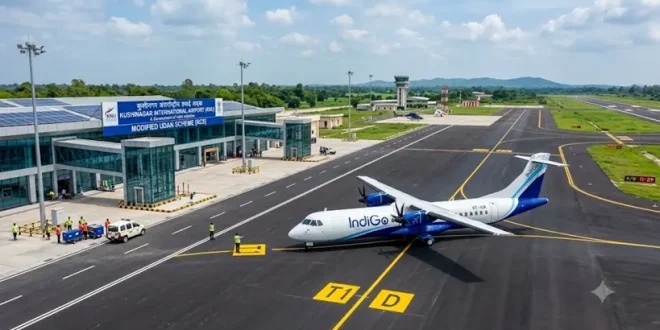
Imagine waking up in a scenic town nestled deep in the Himalayas or a vibrant cultural hub in Northeast India, and being able to board a quick, budget-friendly flight directly to a major metropolitan city. For years, this was a distant dream for millions of residents in Tier-2 and Tier-3 towns. However, the Government of India’s freshly upgraded Modified UDAN (Ude Desh ka Aam Nagrik) Scheme is set to turn that into an everyday reality.
Building on a decade of learnings from the original 2016 roll-out, this strategic shift focuses heavily on infrastructure viability, financial sustainability, and mapping out a resilient blueprint for national aviation growth.
The Big Blueprint: Upgrading India’s Skies
The newly updated program isn’t just a minor facelift; it is a full-scale operational overhaul backed by an massive approved investment of approximately ₹28,840 crore over the next ten years.
Instead of merely subsidizing short-term routes that risk collapsing once initial incentives fade, the Modified UDAN framework addresses structural bottlenecks head-on. The ultimate goal is to connect major economic capitals with previously isolated pockets of the country.
Targeting 100 New Aviation Assets
A central pillar of this next-generation strategy is the planned operationalization of roughly 100 additional aviation assets across the nation. This expansion includes:
-
Regional Airstrips & Commercial Airports: Upgrading dormant historical runways to handle modern narrow-body regional aircraft.
-
Heliports: Providing essential vertical-lift connectivity to rugged terrains where standard runways are structurally impossible.
-
Water Aerodromes: Enabling amphibious sea-planes to service pristine island territories and vast inland water reservoirs.
Reaching the Unreached: Geographies in Focus
The original regional connectivity scheme (RCS) democratized air travel, but geographic isolation continued to plague remote territories. The Modified UDAN Scheme deliberately shifts its priority checklist toward regions with acute terrain and transportation challenges:
-
The Himalayan Belts & North-Eastern States: Bypassing hours of treacherous mountain roads via direct regional flight corridors.
-
Border Areas & Island Territories: Establishing vital strategic links with remote border districts and oceanic regions like Lakshadweep and the Andaman & Nicobar islands.
-
Tribal and Aspirational Districts: Accelerating industrial integration by dropping high-speed transit directly into under-developed economic zones.
Structural Shift: How the ‘Modified’ Scheme Fixes Old Bottlenecks
Why did the original framework need an overhaul? While the early iterations connected millions of first-time flyers, several routes eventually faced commercial hardships. Low passenger demand, steep operating overheads for small carriers, and severe slot constraints at clogged metropolitan hubs resulted in route dropouts.
The Modified UDAN Scheme actively engineers solutions to these specific roadblocks:
-
Rigorous Pre-Route Audits: Routes are assigned based on comprehensive, data-driven viability assessments to ensure consistent, long-term passenger demand.
-
All-Weather Infrastructure: Capital is being channeled straight into localized runway upgrades, air navigation systems, terminal building facilities, and advanced safety instruments.
-
Sustainable Operations: Regulatory support structures are designed to help regional airlines expand their fleets, maintain lower operating expenses, and secure better slot integrations at major hub airports.
Socio-Economic Multipliers: More Than Just Travel
When an emerging town gets added to the national aviation grid, the local economy undergoes a profound transformation:
-
Tourism Explosions: Scenic and culturally rich locations that were previously a grueling two-day train journey away can now be explored comfortably by domestic and international tourists.
-
Lifeline to Essential Services: Remote communities gain rapid, safe access to advanced healthcare facilities, specialized higher education centers, and metropolitan administrative offices.
-
Attracting Private Investment: Modern transport infrastructure is a magnet for new businesses, logistics companies, warehouse developers, and hospitality projects—creating thousands of direct and indirect localized jobs.
Frequently Asked Questions (FAQ)
What exactly is the Modified UDAN Scheme?
It is the upgraded and re-engineered version of the Government of India’s flagship Regional Connectivity Scheme (RCS). It aims to make domestic air travel affordable and accessible for the common citizen while heavily expanding aviation infrastructure in underserved and remote regions.
How much funding has been allocated to the Modified UDAN Scheme?
The government has approved a budget of approximately ₹28,840 crore over a 10-year timeline to modernize infrastructure, build new airports, and subsidize regional routes.
What kinds of aviation assets are being built under this scheme?
The project targets the development of roughly 100 additional assets, consisting of standard commercial airports, localized airstrips, heliports for mountain terrains, and water aerodromes for sea-plane operations.
How does the modified scheme help regional airlines?
By upgrading navigation systems, expanding tier-2 runway capacities, and streamlining slot allocations at major hubs, the scheme lowers the overall operational risks and financial strain faced by regional carriers.
Disclaimer
The information provided in this article concerning the Modified UDAN Scheme, budgetary allocations, and infrastructure goals is compiled for general educational and informational purposes. Policy frameworks, route allocations, and project timelines are subject to updates by the Ministry of Civil Aviation, the Airports Authority of India (AAI), and statutory governing bodies.
For timely updates on regional infrastructure, macroeconomics, and regional development notifications, you can explore the official coverage on Matribhumi Samachar English.