

Gandhinagar. Monday, 13 July 2026
Artificial intelligence has officially transitioned from a corporate experiment into the primary engine driving modern economies. As Indian states race to build localized computing power—a trend analyzed deeply in The Subnational Blueprint: How Indian States Are Architecting a Decentralized AI Revolution—Gujarat has stepped forward with a massive fiscal and structural roadmap.
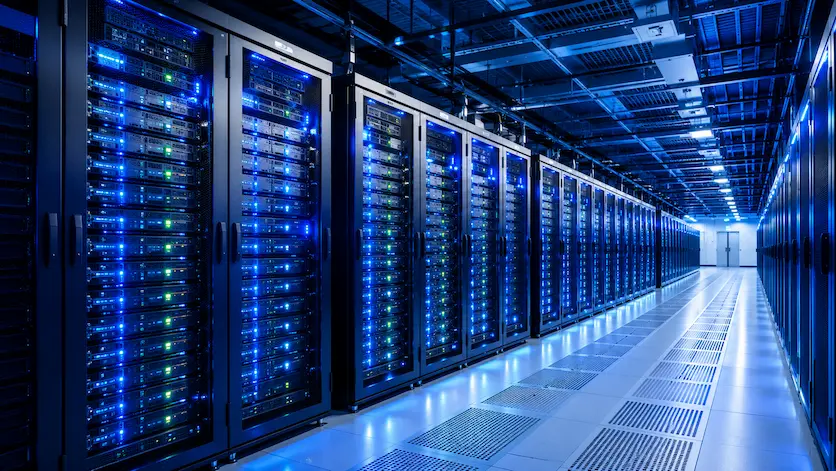
The state government’s newly enacted “Viksit Gujarat – Data Centre Policy (2026-29)” is designed to attract massive global technology investments, establish massive computing hubs, and build the physical infrastructure required to sustain heavy AI workloads.
Why the AI Boom Demands Massive Digital Backbones
Modern AI applications—ranging from large language models to real-time medical diagnostics—are intensely power-hungry and computationally demanding. Traditional data storage facilities cannot handle the sheer stress of massive training cycles. To prevent innovation from stalling, tech companies require highly specialized infrastructure, which is explored as the “invisible nervous system” of the tech sector in The Invisible Backbone of the Digital Economy: A Complete Guide to Modern Data Centre Infrastructure.
Modern hyperscale data centers provide the fundamental pillars for this evolution:
GPU-Powered Clusters: Massive grids of specialized chips capable of processing billions of operations simultaneously.
AI Model Training Infrastructure: Dedicated environments built to run deep-learning algorithms continuously.
Cloud Computing Platforms & Enterprise Storage: Low-latency architectures that allow businesses to deploy AI applications instantly.
Edge Computing Capabilities: Distributed setups that bring data processing closer to the actual user, cutting down lag.
Key Structural Pillars of Gujarat’s New Blueprint
The policy is architected around eliminating the biggest roadblocks facing tech infrastructure: high operational costs, regulatory delays, and immense resource consumption.
1. Direct Fiscal Incentives
To offset the high initial capital expenditure (CAPEX) of building data hubs, Gujarat is offering the longest-duration concessions in India:
Operational Power Relief: A ₹1 per unit power tariff subsidy alongside a 100% reimbursement of electricity duty, both legally guaranteed for an industry-leading 20-year duration.
Capital & Interest Relief: Projects established within the Dholera Special Investment Region (SIR) receive a 2.5% capital subsidy on fixed capital investments. Term loans state-wide qualify for an interest subsidy of up to 4% for 10 years (capped at ₹25 crore annually).
Tax Exemptions: Developers receive a 100% exemption on stamp duty and registration fees for land transactions, alongside a complete State GST (SGST) refund on building and machinery components for up to 20 years.
2. The 51% Green Energy Mandate
Data centers consume vast amounts of electricity, raising environmental concerns. To solve this, the policy dictates a strict sustainability baseline: to qualify for any financial incentives, operators must source at least 51% of their operational power from renewable energy. This allows hyperscalers to capitalize on Gujarat’s massive 47 GW green grid while reducing long-term energy outlays.
3. Protecting Local Water Infrastructure
Because high-performance computing generates extreme heat, liquid cooling systems are vital. To prevent data centers from depleting local agricultural and domestic water tables, the policy mandates that hyperscale facilities must rely on captive desalination plants to process seawater. To ease the financial transition, the state provides capital assistance covering 20% of the cost (up to ₹2 crore per Million Liters per Day) for setting up these facilities.
Turning Dholera into a Global Compute Capital
A primary goal of the policy is driving growth in specialized technology zones. The Dholera SIR is being aggressively positioned to become the world’s largest “Data Center City,” targeting an ultimate installed capacity footprint of 7.5 Gigawatts (GW). Concurrently, the state is building two dedicated subsea cable landing stations to ensure ultra-low latency international connectivity directly to global networks.
This aggressive approach to infrastructure is triggering a massive wave of technical employment across India. From civil engineering and cybersecurity to cloud operations and advanced network design, the talent requirements are surging nationwide, a phenomenon mapped out in India’s AI Infrastructure Boom: Why Data Centres, Cloud and AI Jobs Are Growing Rapidly.
Looking Ahead: The Execution Challenge
While the policy sets a world-class framework, its absolute success will hinge on navigating practical challenges:
Grid Reliability: Maintaining absolute, uninterrupted power stability across massive GPU campuses.
Talent Pipeline: Training a highly specialized local workforce to manage cloud operations and AI systems architecture.
Zoning Clearances: Ensuring smooth land acquisition and structural modifications for vertical server stacking.
If executed efficiently, the 2026 policy will solidify Gujarat’s position as the digital backbone of India, allowing domestic startups, enterprises, and research labs to build tomorrow’s AI innovations on sovereign, highly sustainable soil.
Frequently Asked Questions (FAQ)
Q1: What is the primary target of the Gujarat Data Centre Policy 2026?
A: The policy aims to attract ₹6 lakh crore (~$72+ billion USD) in investments to establish up to 7.5 Gigawatts (GW) of data center capacity across the state, with Dholera serving as a central hub.
Q2: Which data centers qualify for the core financial incentives?
A: Incentives are tailored toward large-scale infrastructure, focusing heavily on hyperscale facilities that meet the minimum approved IT load thresholds specified under the DST framework (typically 150 MW for maximum benefits).
Q3: How does the policy address environmental sustainability?
A: Operators must source at least 51% of their total power from renewable energy sources and deploy captive desalination plants for cooling systems to avoid drawing from local freshwater bodies.
Disclaimer: The information contained in this article is based on the official policy announcements and framework documentation released by the Government of Gujarat for the 2026-29 cycle. Readers and prospective investors are advised to consult the Department of Science and Technology (DST), Government of Gujarat, or authorized legal consultants for binding regulatory updates and detailed application criteria.
