

Mumbai.
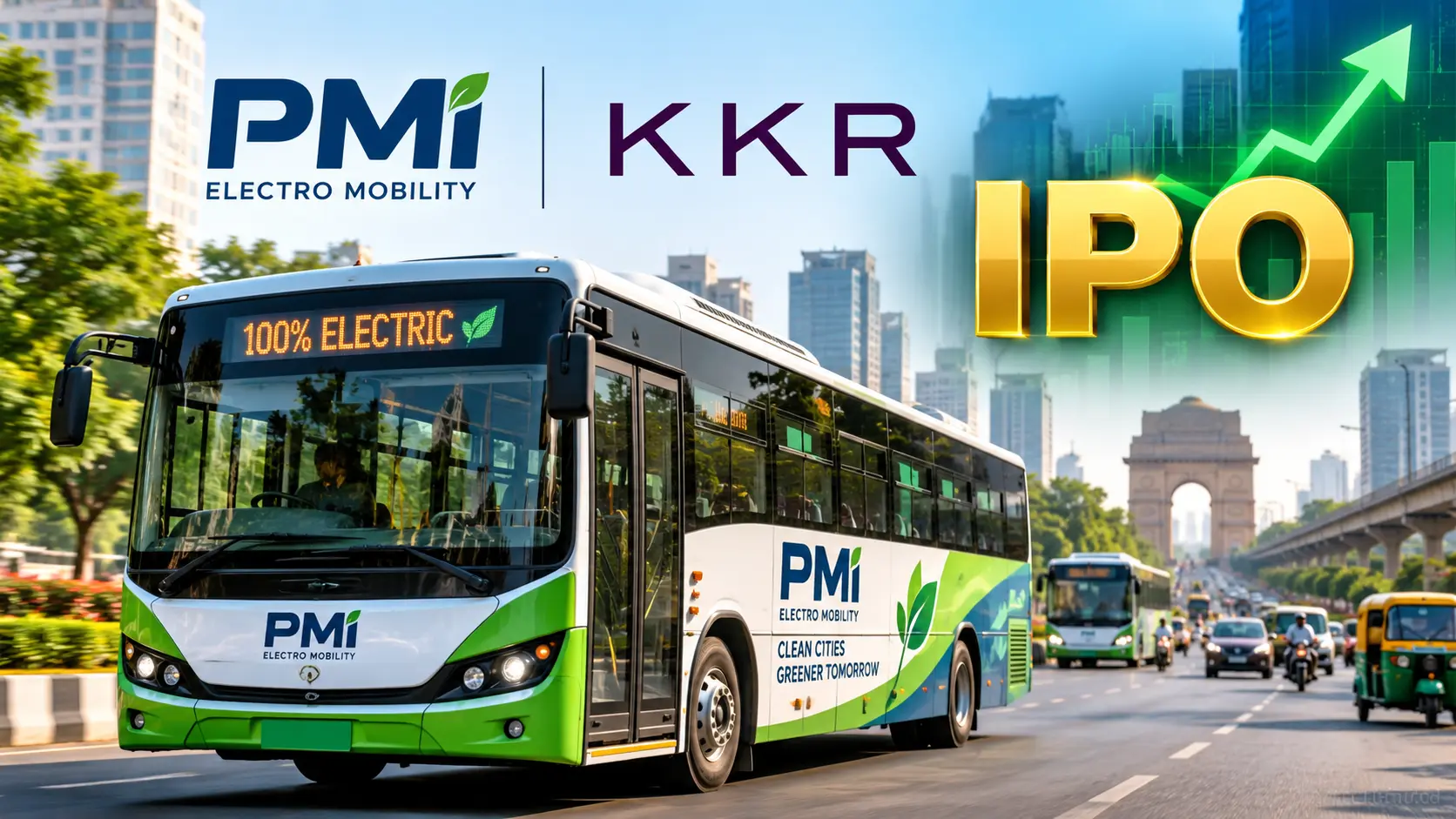
India’s electric commercial vehicle sector is stepping into the public market spotlight. PMI Electro Mobility Solutions, a leading electric bus manufacturer backed by global private equity giant KKR, has confidentially filed preliminary offer documents for an Initial Public Offering (IPO).
The strategic move comes at a crucial juncture when urban centers across India are accelerating the transition toward clean mobility, driven by public transport electrification initiatives and strong institutional investor appetite.
Key Details at a Glance
| Parameter | Details |
| Company Name | PMI Electro Mobility Solutions Limited |
| Filing Status | Confidential filing with SEBI |
| Key Investor | KKR (Kohlberg Kravis Roberts & Co.) |
| Fleet Scale | 3,300+ active electric buses |
| Geographic Footprint | Operating across 34+ Indian cities |
| Inception Year | 2017 |
| Estimated FY2026 Revenue | ~₹1,100 Crore |
| Issue Size & Price Band | To be disclosed upon public prospectus release |
What Does a Confidential IPO Filing Mean?
A confidential IPO submission allows a company to file its draft prospectus with market regulators without immediately exposing sensitive commercial details or operational statistics to the public market.
┌──────────────────────────┐ ┌──────────────────────────┐ ┌──────────────────────────┐
│ Confidential Draft │───>│ Regulatory Review │───>│ Public DRHP Release │
│ Submitted to Regulator │ │ Feedback & Adjustments │ │ Price Band & Issue Open │
└──────────────────────────┘ └──────────────────────────┘ └──────────────────────────┘
This route offers several practical advantages for high-growth industrial firms:
- Business Confidentiality: Commercial terms, client contracts, and technology agreements remain undisclosed during early reviews.
- Strategic Flexibility: The board can incorporate regulatory adjustments or recalibrate timing before publishing final offer documents.
- Process Preparation: Helps streamline compliance without exposing the business to premature market speculation.
KKR’s Investment Strategy & Expansion Framework
Private equity firm KKR expanded its footprint in Indian clean transportation by committing up to $310 million to PMI Electro Mobility and its dedicated fleet operation platform, Allfleet India.
The operational division of labor between both entities creates a vertically integrated mobility platform:
- PMI Electro Mobility Solutions: Focuses on manufacturing 9-meter and 12-meter electric buses alongside specialized zero-emission school transport vehicles.
- Allfleet India: Functions as the operational platform, deploying and maintaining fleet vehicles under Gross Cost Contract (GCC) models with State Transport Undertakings (STUs).
Allfleet is preparing to deploy over 5,000 electric buses under existing government and municipal agreements, forming a strong platform for scalable multi-year revenue growth.
Driving Forces Behind India’s Electric Bus Ecosystem
The commercial electrification segment in India is powered by strong regulatory tailwinds and operational economics:
- Government Schemes: Programs like PM-eBus Sewa target the deployment of 10,000 electric buses under Public-Private Partnership (PPP) frameworks, providing sustained tender demand.
- Lower Lifecycle Costs: While upfront capital outlay remains higher than traditional internal combustion engines, lower per-kilometer energy expenses and fewer moving parts help optimize lifetime operating margins.
- Multi-Industry Opportunities: Expansion across the e-bus segment creates cross-sector growth for battery pack assemblers, high-voltage charging infrastructure networks, vehicle financing providers, and fleet management software vendors.
Peer Benchmarking & Market Landscape
PMI operates alongside both traditional commercial vehicle legacy giants and agile pure-play electric mobility providers:
| Company | Core Business Focus | Operational Footprint |
| PMI Electro Mobility | Pure-play electric bus manufacturing & fleet management | 3,300+ e-buses active in 34+ cities |
| Olectra Greentech | Pure-play electric buses & heavy EV powertrains | Major municipal contract presence nationwide |
| JBM Auto | Commercial EV manufacturing & auto components | Integrated e-bus platform & charging solutions |
| Tata Motors | Full-range commercial & passenger vehicle manufacturer | Dominant player in public and commercial fleet EV segment |
Financial Metrics & Investment Considerations
Preliminary operational data for FY2026 highlights PMI’s expanding commercial footprint:
- Estimated FY2026 Revenue: ~₹1,100 Crore
- Operating Margins: 11% – 12%
- Nine-Month Revenue (9M FY2026): ₹750 Crore
- Unexecuted Order Book: ~7,080 e-buses (as of March 2026)
Key Risks to Evaluate:
- Working Capital Intensity: State transport authority contracts often involve extended payment cycles, increasing working capital demands.
- Supply Chain Risks: Key battery components and power electronics remain vulnerable to international commodity shifts and global logistics disruptions.
- Execution Delays: Revenue recognition relies on timely manufacturing schedules, charging depot readiness, and long-term vehicle uptime compliance.
Frequently Asked Questions (FAQ)
What is PMI Electro Mobility Solutions?
PMI Electro Mobility Solutions is an Indian electric commercial vehicle manufacturer that produces zero-emission buses and operates e-bus fleets for urban transport authorities across 34+ cities.
Who is the main institutional investor in PMI Electro Mobility?
Global investment firm KKR has committed up to $310 million to PMI Electro Mobility and its fleet management subsidiary, Allfleet India.
What is the benefit of a confidential DRHP filing in India?
A confidential DRHP filing allows companies to undergo regulatory scrutiny by SEBI without revealing sensitive operational, financial, and contractual details to the public upfront.
Related External Coverage
- Read about recent EV market developments on Matribhumi Samachar English.
- Track upcoming Indian equity issues on the Matribhumi Samachar IPO Section.
Disclaimer
This article is prepared strictly for informational and educational purposes and does not constitute financial, investment, or legal advice. Investors should review official company filings, audited financial disclosures, and offer documents approved by regulatory authorities before making investment decisions.
