 Matribhumi Samachar English


New Delhi. Updated : Thursday, 4 June 2026
The holy city of Ayodhya Dham has undergone a magnificent renaissance. As the core construction of the Ram Mandir reaches its historic final phases in early 2026, millions of devotees from around the globe are arriving to experience its spiritual grandeur.
Whether you are seeking divine blessings or exploring India’s timeless cultural heritage along the sacred Sarayu River, this comprehensive, updated guide ensures a smooth, seamless, and deeply spiritual journey.
What’s New in Ayodhya? Major 2026 Updates
Spiritual tourism in Uttar Pradesh is breaking records, and infrastructure has evolved rapidly to keep pace. When mapping out your journey, pay close attention to these recent developments:
-
The New Darshan Upgrades: To manage massive crowds effectively, temple authorities have implemented an updated routing system. Devotees can now access designated alternate spaces, visit the Saptarishi Temple, and explore the historic Kuber Tila with much greater ease.
-
The Scientific Surya Tilak: Following its successful launch, the scientific mirror-and-lens mechanism will once again project a sunbeam directly onto the forehead of Ram Lalla at precisely 12:00 PM on Ram Navami.
-
Finished Outer Complex (Parkota): The intricate carvings and the massive outer perimeter wall (Parkota) are entering their final operational phases, creating a stunning architectural frame for the main shrine.
2026 Festival Calendar & Peak Crowd Warning
If you prefer a vibrant, highly festive cultural environment, coordinate your trip with these dates. However, if you prefer shorter queues and a quieter spiritual experience, it is highly recommended to plan your visit outside of these windows.
| Event | 2026 Date | Expected Crowd Intensity |
| Maha Shivratri | February 15 | Moderate to High |
| Ram Navami | March 26 | Extreme (Lakhs of pilgrims expected) |
| Hanuman Jayanti | April 2 | High |
| Deepotsav (Diwali) | November 7–8 | Extreme (Targeting 28 Lakh+ Diyas) |
| Kartik Purnima | November 24 | High |
Daily Darshan & Temple Schedule
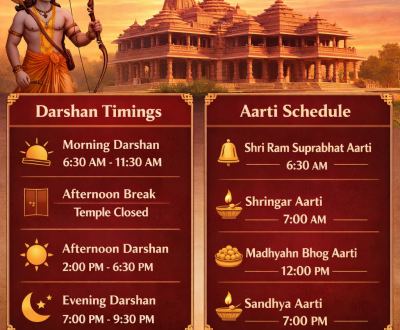
Crucial Travel Tip: The temple closes its gates during the early afternoon for a ritual break. Do not get caught waiting outside in the heat—structure your day around this schedule.
-
4:30 AM: Mangala Aarti (Requires confirmed advance booking)
-
6:30 AM to 12:00 PM: Morning Darshan Window
-
12:00 PM to 2:00 PM: TEMPLE CLOSED (Afternoon Recess)
-
2:00 PM to 10:00 PM: Evening Darshan Window
Essential Step-by-Step Guide to Booking Free Aarti Passes
Official Aarti passes are entirely free of cost. Never pay unauthorized third-party agents or online scalpers. Because demand is exceptionally high, use the official portal to secure your slot weeks in advance:
Where to Stay: Handpicked Accommodations Near the Temple
Ayodhya’s hospitality sector has scaled up significantly, offering everything from luxury glamping to authentic, family-run homestays near the Ram Janmabhoomi Path.
Premium & Luxury Stays
-
Hotel Shree Venktesh Nilayam: A premium 4-star property located an incredible 300 meters from the temple gate, making it the top option for avoiding traffic.
-
Praveg Tent City (Brahma Kund): Upscale luxury glamping featuring tranquil environments, cultural gatherings, and pure vegetarian fine dining just a 13-minute walk from the shrine.
Mid-Range & Brand Comfort
-
The Govind Palace: Highly rated for its on-site pure-vegetarian restaurant and convenient 4-minute walk to the main temple complex.
-
Hotel Abhinandan: Situated nearby in Professor’s Colony, providing professional hospitality within a 5-minute walking radius.
Budget & Highly-Rated Homestays
-
Siyaram Kunj Guest House: Highly popular for its strategic location—just a 7-minute walk to both the Ram Mandir and the landmark Hanuman Garhi temple.
-
Luvkush Inn: An exceptional premium homestay offering personalized, family-style care and local travel guidance.
Recommended Two-Day Spiritual Itinerary
Day 1: The Spiritual Heart of Ayodhya
  ├── Morning: Seek traditional early blessings at Hanuman Garhi atop the hill
  ├── Mid-Day: Grand Darshan at the Ram Janmabhoomi Mandir & Kanak Bhawan
  ├── Afternoon: Explore the colorful royal courtyards of Dashrath Mahal
  └── Evening: Witness the glowing lamps at Ram Ki Paidi and the evening Sarayu Aarti
Day 2: Sacred Heritage & Hidden Gems
  ├── Morning: Visit Nageshwarnath Temple (Lord Shiva shrine) and Sita Ki Rasoi
  ├── Mid-Day: View the ancient black stone idols at Treta Ke Thakur
  ├── Afternoon: Walk up the historic, peaceful slopes of Mani Parvat
  └── Evening: Take a peaceful stroll and enjoy sunset meditation at Guptar Ghat
Critical Travel, Safety, and Electronic Rules
-
Electronic Ban: Absolutely zero personal electronic items—including smartphones, smartwatches, tracking devices, and power banks—are permitted inside the inner sanctum. Utilize the secure, free lockers available at the Free Facilitation Centre right at the entrance gate.
-
NRI & International Visitors: If you are traveling from abroad, visit the Pilgrim Service Center with your original passport to inquire about expedited “Sugam Darshan” options.
-
Senior Assistance: When filling out your online Aarti pass application, ensure you click the “Wheelchair” checkbox to alert the Trust staff for on-ground mobility assistance.
-
Weather Realities: Summer months bring extreme heat spikes to Uttar Pradesh. If traveling during May or June, wear loose, breathable cotton clothes, wear a wide-brimmed hat, and carry a reusable water bottle to stay fully hydrated.
Relevant Links & Further Reading
To expand your context on the history, artistic milestones, and global impact of the holy city, check out these official, detailed features from Matribhumi Samachar:
-
To learn about the grand artistic additions to local shrines, read about the First Gold Plated Kalasam Installation at Amawa Ram Mandir.
-
To discover how the landmark spiritual event echoed across the world, explore how Municipalities in Canada Celebrated Ram Mandir Day.
-
To explore the deep multifaith roots and historic connections to the region, see the detailed piece on the Jain Community Connection and Celebrations in Ayodhya.
-
For unique ways to stay connected spiritually from home, learn about the Ram Daak Sewa Postcard Initiative for Devotees.