 Matribhumi Samachar English


Jammu. Friday, 1 May 2026
The air in Baramulla was thick with nostalgia and incense this week as the Ganesh Temple at Kachua Muqam witnessed its first major religious congregation in nearly four decades. For the Kashmiri Pandit community, the revival of the annual rituals on April 29 and 30, 2026, represents a monumental bridge between a fractured past and a hopeful future.
The Heart of the Homecoming
Located just 15 kilometers from Baramulla town, the Ganesh Temple at Kachua Muqam was once a cornerstone of spiritual life in North Kashmir. The tradition of the annual Ganesh festival was abruptly severed in 1989 during the onset of militancy.
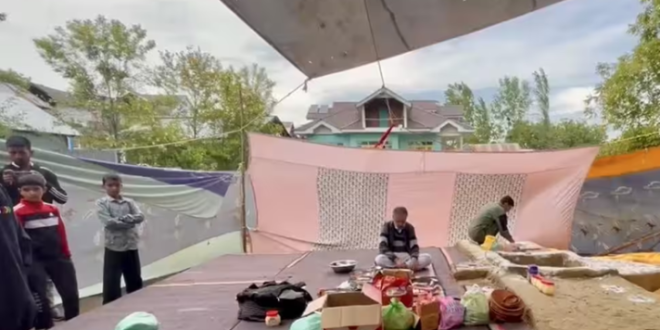
On Thursday morning, the silence of 36 years was broken by the chanting of Sanskrit shlokas. Displaced Pandits, many traveling from Jammu and other parts of India, gathered to perform a sacred havan. For many, this was not just a pilgrimage but a “trial return”—a deeply emotional assessment of the atmosphere for future resettlement.
A Testament to “Kashmiriyat”
The most significant aspect of this revival was the participation of the local Muslim community. Far from being passive observers, local residents actively:
-
Cleaned and prepared the temple premises.
-
Managed logistics and refreshments for the returning devotees.
-
Reaffirmed the spirit of coexistence, proving that the social fabric of the Valley remains resilient despite decades of conflict.
“Winters will pass, the snow will melt, and spring will return. We are waiting for that spring when we can come back to our homes forever.” — A devotee at Kachua Muqam
Government Vision: Beyond Rituals
The district administration views this event as a hallmark of “normalcy” and has announced a roadmap to transform Kachua Muqam into a major spiritual landmark:
-
Infrastructure: Plans for a Yatri Niwas (pilgrim hostel) to facilitate overnight stays.
-
Preservation: Immediate renovation of the sanctum sanctorum to preserve its ancient architecture.
-
Tourism Map: Formal inclusion of the site in the Jammu & Kashmir religious tourism circuit to boost the local economy.
Contextual Nuance
While the event is overwhelmingly positive, it is important to note:
-
Safety & Sustainability: While the administration calls it a sign of “normalcy,” the community views it as a “cautious step.” Full-scale resettlement remains dependent on continued security and economic integration.
-
Historical Timeline: The gap is often cited as 34 or 35 years, but based on the cessation of the annual festival in late 1989/early 1990, the 2026 return marks the 36th year since the tradition was fully observed.
Related Reading
For more updates on cultural revivals and news from the region, you can explore: