
New Delhi. Updated : Wednesday, 3 June 2026
The practice of applying a Tilak (also referred to as a Teeka) is one of the most recognizable and enduring symbols of Hindu identity. While casual observers often view it strictly as a religious or cultural mark, its significance is deeply rooted in ancient yogic science, psychology, and physiological discipline. From the cooling, fragrant sandalwood paste applied on a priest’s forehead to the vibrant red kumkum worn by a bride, every authentic Tilak carries a specific psychological intent and material vibration.
What is a Tilak? The Gateway to the “Third Eye”
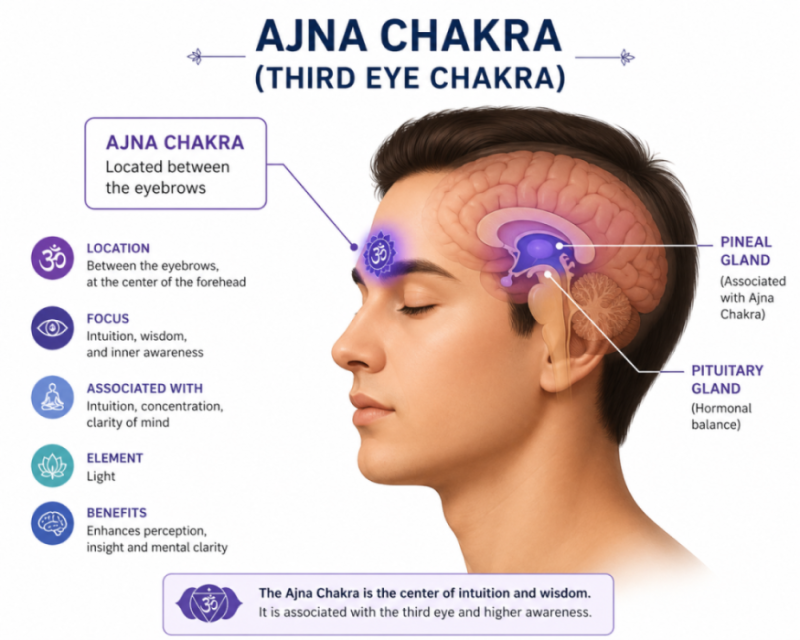
In Sanskrit, the word Tilak translates simply to a mark, spot, or ornament. It is traditionally applied at the precise point between the eyebrows known as the Bhrumadhya.
In Vedic anatomy and yogic science, this location is home to the Ajna Chakra (the Sixth Chakra), famously dubbed the “Third Eye.” The Ajna Chakra is considered the command center of the subtle body—the seat of intuition, mental clarity, and higher inner consciousness. By gently pressing and marking this spot daily, a practitioner creates a physical “anchor” designed to draw awareness away from external, material distractions and focus it inward toward self-realization.
1. Spiritual Anatomy: Devotion and Energetic Protection
The shape and substance of a Tilak serve multiple profound purposes within spiritual practice:
Surrender and Blessings: The application of a Tilak is frequently the final, sealing act of a Puja (prayer ritual). It signifies that the devotee has absorbed the positive, elevated energy of the ritual and carries that divine vibration out into their secular daily life.
A “Psychic Shield”: According to traditional esoteric texts, the forehead is a primary zone for energy exchange and vulnerability. Applying dense, sacred natural materials over the Bhrumadhya acts as a protective seal, grounding the individual against negative external environment changes.
Identifying Sectarian Traditions
You can frequently identify a devotee’s specific philosophical alignment or lineage path by looking at the geometry of their Tilak:
| Tilak Name | Appearance | Tradition | Deep Symbolism |
| Urdhva Pundra | Vertical U-shape or V-shape lines | Vaishnavas (Followers of Lord Vishnu) | Represents the sacred lotus feet of the Divine. |
| Tripundra | Three horizontal parallel bands | Shaivites (Followers of Lord Shiva) | Symbolizes the purging of ego, past karma, and worldly illusion (Maya). |
2. Scientific & Physiological Benefits of Forehead Stimulation
Ancient Indian Rishis (sages) were careful observers of human nature, acting as “scientists of the soul.” They specifically designated natural materials for the Tilak that interacted positively with the human body’s nervous system.
Neurological Activation & The Pineal Gland
Modern neurological science identifies the area directly behind the Bhrumadhya as the location of the frontal cortex—the region responsible for high-level decision-making, emotional regulation, and sustained focus.
Deep within the brain structure along this same central axis lies the pineal gland. In acupressure and holistic wellness therapies, stimulating this central facial pressure point is believed to help soothe the nervous system, quietly aiding the regulation of serotonin and melatonin—the hormones responsible for mood and healthy sleep cycles.
The Chemistry of Traditional Ingredients
The medicinal benefits of authentic, traditional ingredients offer very practical health advantages:
Sandalwood Paste (Chandan): Naturally cooling and alkaline. Applying pure sandalwood paste to the forehead effectively cools the skin, calms local nerves, and helps mitigate tension headaches induced by mental overexertion or extreme heat.
Turmeric (Haldi) & Pure Kumkum: Real, traditional kumkum is not an artificial synthetic dye; it is a meticulous mixture of pure turmeric powder and lime juice. Both turmeric and lime possess prominent natural antibacterial and anti-inflammatory properties, offering an organic shield against dust and environmental skin infections during historic travel or massive festival gatherings.
3. The Power of Materials: What Your Tilak Says
The substance chosen to form the mark significantly shifts its symbolic intent and internal focus:
Sandalwood (Chandan): Represents Purity and Peace. Ideal for deep meditation, cooling an overactive mind, and gathering focus.
Kumkum (Red Vermilion): Represents Shakti (divine feminine energy) and Prosperity. Traditionally utilized during festive celebrations, weddings, or when invoking mental courage.
Vibhuti (Holy Ash): Represents the Transience of Life. Primarily used by spiritual seekers practicing Vairagya (detachment) as a visual reminder that everything material eventually returns to ash.
Turmeric (Haldi): Represents Healing and Auspiciousness. Extensively utilized in rituals concerning physical health, wellness, and fresh beginnings.
4. Modern Psychological Relevance: A Mindfulness Anchor
In an era defined by endless digital notifications and shortened attention spans, the Tilak acts as an invaluable Mindfulness Anchor.
Behavioral psychologists have long noted that small, intentional daily rituals introduce greater emotional stability into an individual’s life. The subtle, persistent physical sensation of the drying paste on the skin acts as a “tactile reminder” to pull a distracted mind back to the present moment, anchoring the wearer to a calm, thousands-of-years-old lineage of deep inner wisdom..
References & Archival Resources
For more deep dives into ancient cultural histories and traditional heritage coverage, you can explore the Third Eye Archives – Matribhumi Samachar English or review topics on ancestral practices at the Spiritual Discipline Archives – Matribhumi Samachar English.
