 Matribhumi Samachar English


New Delhi. Friday, 19 June 2026
The landscape of technology employment in India is undergoing a monumental, structural shift. The traditional era of low-complexity, manual software coding assembly is transitioning into a “skill-premium” market. Driven by massive national investments including the IndiaAI Mission and the India Semiconductor Mission (ISM 2.0), the ultimate technology race has moved past software into physical compute capacity, localized high-performance data centers, and advanced manufacturing assets.
For students, engineers, and tech professionals, this evolution is unlocking premium, high-paying career paths. Rather than acting as a back-office for global tech giants, India is retaining proprietary intellectual property (IP) and building out state-of-the-art facilities across the country.
10 Exploding High-Value Engineering Careers in India
1. AI Infrastructure Engineer
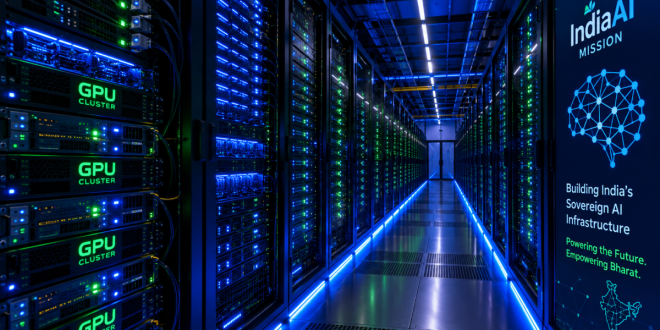
As India aggressively builds sovereign AI capabilities, organizations require infrastructure specialists to design, scale, and manage massive hardware setups. This role is crucial because traditional air conditioning and server structures are insufficient for modern deep-learning requirements.
-
Key Responsibilities: Managing AI clusters, optimizing GPU environments, and deploying large-scale liquid cooling technologies to prevent processing nodes from overheating.
-
Skills Required: Linux administration, Kubernetes, cloud pipelines, High-Performance Computing (HPC), and advanced storage networking.
-
Career Outlook: Critical demand across regional hyperscale hubs and major state-level developments like Maharashtra’s AI and Data Centre Policy.
2. Semiconductor Process Engineer
With front-end manufacturing moving directly onto the factory floor, process engineers manage the intricate chemistry of printing circuits onto raw silicon wafers.
-
Key Responsibilities: Fabricating process nodes, improving yield margins, cleanroom operations, and managing extreme grid continuity.
-
Skills Required: Electronics engineering, materials science, semiconductor physics, and statistical process control.
-
Career Outlook: Multi-state geographic dispersal is creating thousands of technical positions at mega-fabs like Tata Electronics’ upcoming site in Dholera, Gujarat.
3. AI Model Engineer
These professionals design, build, and adapt the algorithmic frameworks powering localized artificial intelligence.
-
Key Responsibilities: Developing custom machine learning models, training large-scale foundation systems, and contextual fine-tuning.
-
Skills Required: Python programming, PyTorch, TensorFlow, data engineering pipelines, and neural network architectures.
-
Career Outlook: Strong long-term growth as organizations build specialized models tailored to Indian regional languages and sector-specific applications like rural healthcare diagnostics.
4. Chip Design Engineer
While physical manufacturing plants get massive attention, upstream chip design represents one of the highest-margin value sectors in India’s semiconductor pipeline.
-
Key Responsibilities: Creating integrated circuits (ICs), running virtual simulations, power optimization, and hardware verification.
-
Skills Required: VLSI design, SystemVerilog, Electronic Design Automation (EDA) tools, and digital electronics.
-
Career Outlook: Supported heavily by the government’s Design-Linked Incentive (DLI) scheme, localized hardware startups are rapidly expanding, transforming academic hubs like MNIT Jaipur into deep-tech design hubs.
5. AI Safety and Governance Specialist
Responsible AI deployment is non-negotiable as sovereign platforms scale to handle population-level public data.
-
Key Responsibilities: AI risk assessment, auditing algorithmic models for context drift, compliance monitoring, and ethical guardrail implementation.
-
Skills Required: AI governance frameworks, regulatory compliance protocols, cybersecurity, and data privacy legislation.
-
Career Outlook: A premium specialized career path expanding rapidly as enterprises integrate AI into financial systems and India’s Digital Public Infrastructure (DPI) rails.
6. Edge AI Engineer
Edge AI allows computational intelligence to process localized datasets natively on-device, bypassing heavy cloud latency and connectivity limitations.
-
Key Responsibilities: Model compression, hardware-software optimization, and deploying lightweight vision models directly onto local processors.
-
Skills Required: Embedded systems, TinyML, computer vision, and edge computing hardware platforms.
-
Career Outlook: Booming across drone swarms, smart manufacturing, and IoT industries, highlighted by homegrown hardware milestones like Netrasemi’s 12nm A2000 chip.
7. Semiconductor Equipment Specialist
Modern semiconductor fabs house incredibly precise, multi-million-dollar production machinery that requires highly specialized maintenance.
-
Key Responsibilities: Installing extreme-precision manufacturing equipment, industrial diagnostics, and calibrating advanced optical lithography systems.
-
Skills Required: Mechanical engineering, robotics, automation systems, and complex process troubleshooting.
-
Career Outlook: Upstream manufacturing equipment installation consumes roughly 65% of a new fab’s capital layout, securing long-term technical roles for certified machinery experts.
8. AI Data Engineer
High-quality, meticulously structured data is the core foundation supporting any successful machine learning system.
-
Key Responsibilities: Constructing robust big data pipelines, ensuring data quality management, large-scale dataset preparation, and governance compliance.
-
Skills Required: Advanced SQL, Python, Big Data frameworks (Hadoop/Spark), Vector Databases (Pinecone, Milvus), and cloud storage architectures.
-
Career Outlook: Essential across every single sector deploying AI, offering competitive average salaries ranging from ₹6 Lakh to over ₹35 Lakh annually based on architectural experience.
9. AI Hardware Architect
Hardware architects close the gap between software instructions and physical silicon execution by creating accelerators built specifically for neural networks.
-
Key Responsibilities: Designing AI accelerator processors, benchmarking hardware performance, parallel computing optimization, and hardware-software co-design.
-
Skills Required: Computer architecture, parallel processing methodologies, VLSI, and deep knowledge of machine learning workloads.
-
Career Outlook: Accelerating rapidly as India pursues absolute technological sovereignty and domestic self-reliance in advanced computing hardware.
10. Digital Twin and Industrial AI Specialist
The convergence of heavy manufacturing and AI is driving the growth of Industry 4.0 smart factories.
-
Key Responsibilities: Creating high-fidelity virtual simulations of physical factories, predictive maintenance planning, and stabilizing production margins against slight power grid fluctuations.
-
Skills Required: Industrial automation systems, AI analytics, Internet of Things (IoT) design, and simulation modeling software.
-
Career Outlook: Expanding swiftly across industrial hubs as automation scales up to maximize output in consumer electronics and automotive sectors.
⚡ The Symbiosis of Silicon and Compute Infrastructure
A crucial trend defining this tech transformation is that modern microchips do not exist in a vacuum. As detailed by Matribhumi Samachar, domestic semiconductor assembly matrix lines are scaling up in absolute tandem with hyperscale, AI-enabled data center networks.
From massive corporate landmarks like the Meta-Reliance partnership building a 168-megawatt AI data facility in Jamnagar, Gujarat, to Assembly, Testing, Marking, and Packaging (ATMP) units breaking ground in Assam and Uttar Pradesh, India is establishing an interconnected hardware pipeline.
Frequently Asked Questions (FAQs)
What is the primary difference between a traditional software engineer and an AI Infrastructure Engineer?
Traditional software engineers focus on building applications, writing code, and developing user interfaces. An AI Infrastructure Engineer focuses on the underlying physical and systems architecture—such as high-performance GPU clusters, specialized networking rails, and advanced liquid cooling technologies—required to run and train those deep learning applications.
How is the Government of India supporting the semiconductor career path?
The government supports this sector through the India Semiconductor Mission (ISM 2.0) and the Ministry of Electronics and Information Technology’s (MeitY) Design-Linked Incentive (DLI) scheme. These programs offer financial incentives, infrastructure support, and capital subsidies to both local deep-tech startups and global engineering firms.
Can electronics or mechanical engineers pivot into these AI fields?
Yes. Roles like Semiconductor Process Engineers, Equipment Specialists, and AI Hardware Architects heavily recruit graduates from electronics, mechanical, electrical, and materials engineering backgrounds. Learning foundational Python, data analytics, and embedded systems modeling bridges the gap into tech hardware design.
Disclaimer: The career insights, salary trends, and regulatory details presented in this article reflect corporate announcements, market reports, and technological milestones documented up to mid-2026. Actual job openings, compensation structures, and training timelines may fluctuate depending on global economic conditions, technological updates, and specific regional policies.
Deepen Your Knowledge on India’s Tech Growth:
-
Discover how sovereign data setups are changing investments: The Hardware Boom: Inside the Relentless AI Data Center Infrastructure Growth in India
-
Read about active manufacturing pipelines: Silicon Sovereign: How India Semiconductor Mission 2.0 is Transforming the Global Chip Landscape
-
Explore regional deep-tech milestones: Inside Jaipur’s Bold Leap into AI, Semiconductors, and Quantum Computing