

Mumbai.
India’s manufacturing sector regained strong operational momentum in September 2026, driven by accelerated domestic demand, robust export order inflows, and expanding factory output.
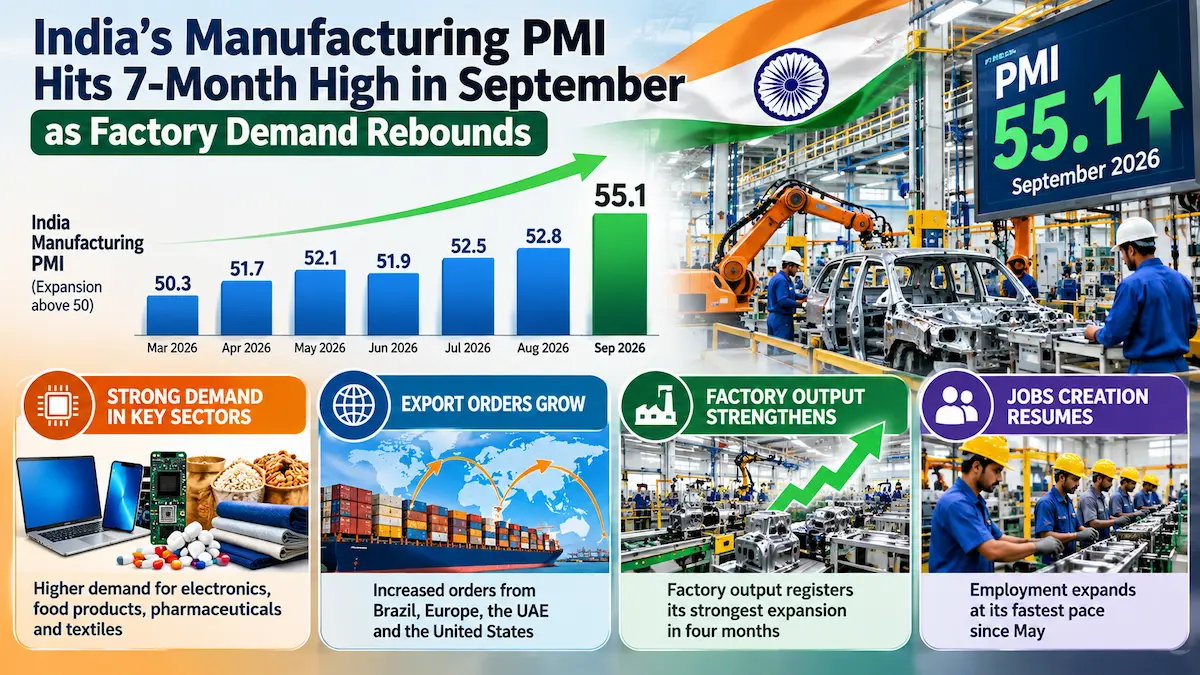
According to the latest survey data released by S&P Global, the HSBC India Manufacturing Purchasing Managers’ Index (PMI) climbed to 55.1 in September 2026, rising from 52.8 in August. A PMI figure above the critical 50.0 threshold indicates expansion, marking September’s figure as the strongest rate of growth in factory activity since February 2026.
Manufacturing Expansion Trajectory (PMI Baseline: 50.0)
August 2026 [52.8] █████████████████░░░░░░
September 2026 [55.1] █████████████████████░░ (7-Month High)
Key Growth Drivers Behind the September Surge
Robust Recovery in New Orders & Global Exports
The core catalyst for the September acceleration was a sharp uptick in new business. Orders expanded at their fastest clip since February 2026, driven primarily by demand across four key industrial pillars: electronics, pharmaceuticals, food processing, and textiles.
On the international front, manufacturers noted a surge in overseas demand. New export orders grew markedly, backed by clients located in key strategic markets:
- The Americas: Brazil and the United States
- Europe: Cross-continental trade demand
- Middle East: The United Arab Emirates (UAE)
Output Expansion & Aggressive Stock Building
Supported by incoming domestic and international order books, production growth reached a four-month peak. To prevent supply bottlenecks and prepare for upcoming seasonal demand, manufacturers ramped up raw material purchases and expanded stockpiles:
- Finished-Goods Inventories: Rose for the third consecutive month.
- Historical Rate: The pace of inventory accumulation reached its second-highest point in nearly 12 years.
Factory Employment Resumes Expansion
Higher operational requirements encouraged firms to expand their workforce. Factory employment returned to growth at its fastest pace since May 2026. This reversal follows a temporary decline in August, which had marked the first contraction in Indian factory employment in nearly two and a half years.
Cost Inflation and Quarterly Context
| Operational Indicator | September 2026 Reading | Trend / Context |
| Manufacturing PMI | 55.1 | Rebounded from 52.8 in August |
| Q2 FY27 Average PMI | 53.8 | Lowest Q2 average since 2021 |
| Input Cost Inflation | Accelerated | Driven by steel, electronic components & pharma inputs |
| Business Sentiment | 4-Month High | Buoyed by strong demand outlook & inquiry volumes |
While the September reading highlights strong growth, it follows a softer second quarter (Q2 FY2026–27). The Q2 average PMI stood at 53.8, marking the lowest second-quarter average since Q2 2021.
Additionally, input prices rose at a faster rate due to elevated costs for steel, electronic components, and pharmaceutical raw materials. However, overall input price pressures remained below historical averages, allowing firms to keep selling price increases modest.
Relevant Industry & Portal Links
Frequently Asked Questions (FAQ)
What was India’s Manufacturing PMI in September 2026?
India’s Manufacturing Purchasing Managers’ Index (PMI) stood at 55.1 in September 2026, up from 52.8 in August 2026, signalling the fastest rate of growth in seven months.
Which industrial sectors saw the strongest demand surge?
According to the survey, new business was primarily led by high demand across electronics, food products, pharmaceuticals, and textiles.
Did job creation improve in September 2026?
Yes. Following a brief contraction in August 2026 (the first job decline in nearly 2.5 years), factory hiring rebounded significantly, marking its fastest expansion since May 2026.
Disclaimer
This article is compiled based on official PMI survey reports released by S&P Global and HSBC for informational and analytical purposes only. Financial markets and economic trends are subject to macroeconomic dynamics. Readers should not treat this content as investment advice or financial forecasting.
