

Mumbai.
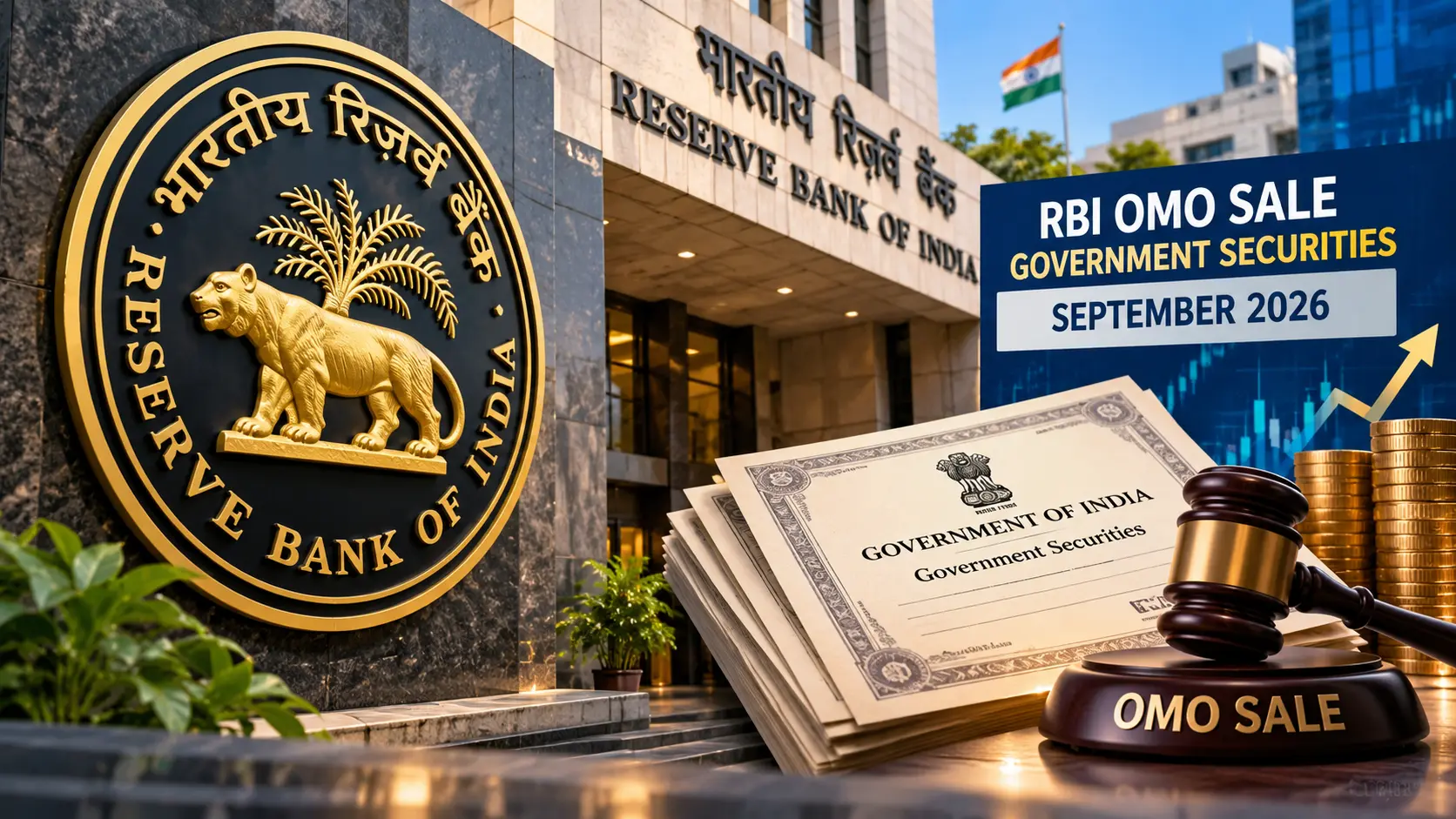
The Reserve Bank of India (RBI) on September 28, 2026, successfully conducted the third and final tranche of its planned ₹1,00,000 crore government bond sale programme through Open Market Operations (OMO). The final auction involved the sale of government securities (G-Secs) worth ₹25,000 crore aimed at absorbing surplus liquidity from the Indian banking system.
This final tranche follows two previous successful bond sales—₹50,000 crore on September 17 and ₹25,000 crore on September 21. Financial market participants, including banks, primary dealers, corporate borrowers, and debt mutual fund managers, watched the auction closely, as changes in system liquidity directly impact bond yields and short-term borrowing costs.
Breakdown of the ₹1 Lakh Crore OMO Programme
The three-tranche liquidity absorption programme was executed seamlessly via the RBI’s electronic E-Kuber system:
| Tranche Date | Target Value (Notified) | Primary Purpose | Status |
| September 17, 2026 | ₹50,000 Crore | Initial large-scale liquidity withdrawal | Completed |
| September 21, 2026 | ₹25,000 Crore | Secondary liquidity absorption | Completed |
| September 28, 2026 | ₹25,000 Crore | Final tranche completion | Completed |
| Total Absorption | ₹1,00,000 Crore | Comprehensive OMO Programme | Fully Executed |
What is an Open Market Operation (OMO)?
An Open Market Operation (OMO) is a monetary policy tool utilized by central banks to regulate liquidity levels within the domestic banking framework:
- OMO Purchase: RBI buys government bonds from banks Injects cash into the banking system Increases overall liquidity.
- OMO Sale: RBI sells government bonds to banks Withdraws money from the banking system Absorbs excess liquidity.
Securities Offered in the September 28 Auction
The final auction offered six prominent Government of India securities maturing between 2029 and 2032:
- 7.59% GS 2029
- 6.45% GS 2029
- 7.61% GS 2030
- 5.85% GS 2030
- 6.54% GS 2032
- 7.26% GS 2032
Why Did the RBI Drain Liquidity?
The surplus liquidity in the banking system expanded due to substantial foreign currency inflows under the RBI’s specialized USD-INR Forex Swap facility (driven predominantly by Foreign Currency Non-Resident (Bank) / FCNR(B) deposit inflows exceeding $132 billion).
When banks hold excessive idle cash, short-term money market rates can drop significantly below the policy Repo rate. By absorbing ₹1 lakh crore, the RBI ensures that overnight and short-term interest rates stay tightly aligned with its official monetary policy stance without changing the benchmark repo rate.
Market Implications: What It Means for You
Government Bond Yields & Prices
Increased supply of government securities creates temporary upward pressure on bond yields. Because bond prices and yields share an inverse relationship, rising yields can cause a brief dip in paper prices. However, strong demand during the auction (over 2.7x bid coverage) demonstrated robust market capacity to absorb the bonds.
Debt Mutual Funds
Debt funds holding medium-to-long duration government securities experience short-term Net Asset Value (NAV) fluctuations when yields shift. Investors holding liquid or short-duration debt funds face minimal impact, while long-duration funds may reflect temporary yield volatility.
Borrowers & Lenders
While the OMO sale reduces surplus bank liquidity, it does not automatically translate into higher retail loan interest rates for home or car loans. Retail loans remain primarily pegged to external benchmarks (such as the Repo rate) and overall bank funding costs.
Frequently Asked Questions (FAQ)
Q1. Does an OMO bond sale mean the RBI is raising the Repo Rate?
No. OMOs are operational liquidity management tools, whereas the Repo Rate is an overarching policy rate set by the Monetary Policy Committee (MPC). The RBI can absorb surplus liquidity while keeping the Repo Rate unchanged.
Q2. How did investors pay for the bonds?
Successful bidders paid the RBI through the E-Kuber banking portal, with funds settled on September 29, 2026, effectively transferring cash from commercial bank reserves back to the central bank.
Q3. How does this impact retail fixed deposits (FDs)?
Liquidity absorption brings money market rates in line with policy rates, helping maintain stable, competitive interest rates across bank deposits.
Disclaimer
This article is published purely for informational and educational purposes. It does not constitute formal financial, legal, or investment advice. Investors are advised to evaluate their risk appetite or consult a certified financial planner before making debt market investment decisions.
Related Coverage & External Links:
- Read more on domestic economic developments and financial news at Matribhumi Samachar English.
- Explore ongoing coverage on Indian central banking policy updates at Matribhumi Samachar Business.
