

Mumbai.
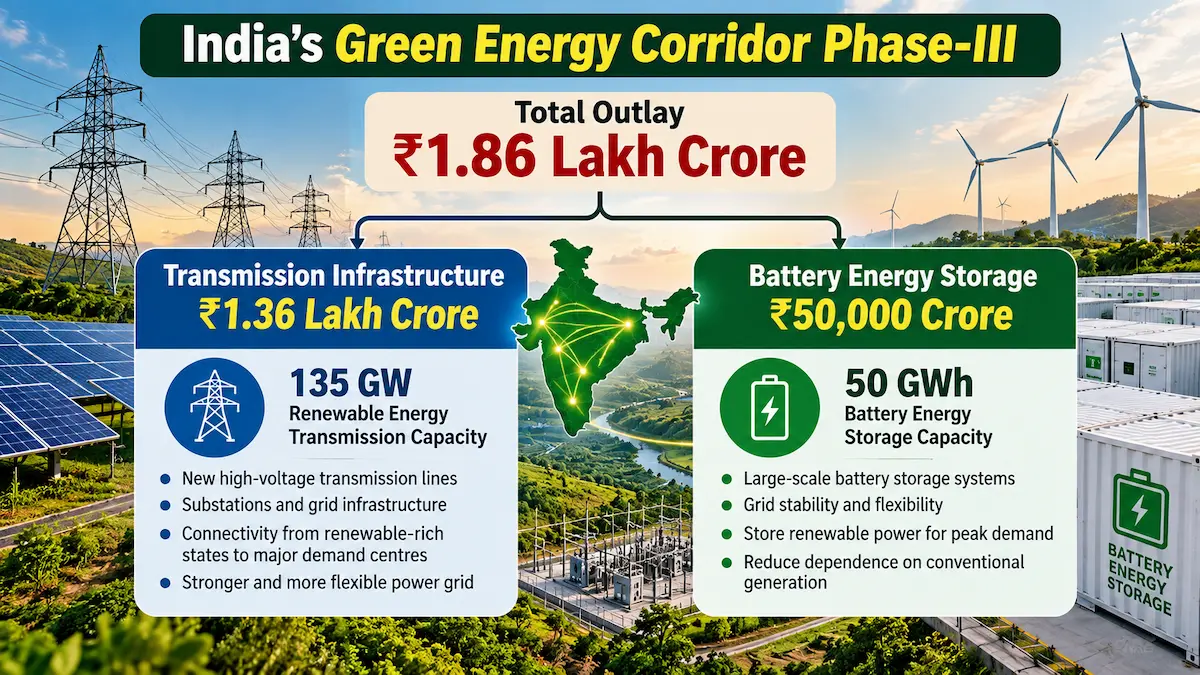
In a major push toward India’s clean energy transition, the Union Cabinet, chaired by Prime Minister Narendra Modi, approved the Green Energy Corridor Phase-III (GEC-III) scheme. With a total project outlay of ₹1,86,405 crore, this strategic expansion is designed to solve transmission bottlenecks, integrate 135 GW of variable solar and wind power into the national power grid, and deploy 50 GWh of utility-scale battery energy storage systems (BESS) across the country.
The GEC Phase-III scheme targets full implementation by FY 2032–33, establishing a robust foundation for firm, dispatchable clean electricity across industrial hubs and urban centers.
Key Infrastructure Breakdown
┌─────────────────────────────────────────────────────────┐
│ Green Energy Corridor Phase-III (GEC-III) │
│ Total Outlay: ₹1,86,405 Crore │
└────────────────────────────┬────────────────────────────┘
│
┌───────────────────────────────┴───────────────────────────────┐
│ │
┌───────────────────────────▼───────────────────────────┐ ┌────────────────────────────▼──────────────────────────┐
│ Intra-State Transmission Systems (InSTS) │ │ Battery Energy Storage Systems │
├───────────────────────────────────────────────────────┤ ├──────────────────────────────────────────────────────┤
│ • Allocated Outlay: ₹1,36,378 Crore │ │ • Allocated Outlay: ₹50,000 Crore │
│ • Target Evacuation: 135 GW Renewable Capacity │ │ • Target Capacity: 50 GWh BESS │
│ • Delivery Route: Competitive Bidding (TBCB) │ │ • Focus: Grid Balancing, Evening Peak Management │
└───────────────────────────────────────────────────────┘ └──────────────────────────────────────────────────────┘
The GEC-III allocation divides capital directly between physical grid expansion and energy storage technology:
- Intra-State Transmission Systems (InSTS): ₹1,36,378 crore dedicated to high-voltage lines, regional substations, and evacuation infrastructure.
- Battery Energy Storage Systems (BESS): ₹50,000 crore earmarked to deploy 50 GWh of advanced battery storage.
- Central Financial Support: ₹54,082 crore provided in Central Financial Assistance (CFA) to offset transmission charges and protect consumers from rising electricity tariffs.
50 GWh Battery Storage: Solving Renewable Variability
While early phases of the Green Energy Corridor concentrated primarily on high-voltage transmission lines, Phase-III introduces a heavy emphasis on grid-scale battery storage.
Solar generation drops sharply in the late afternoon just as residential and commercial demand spikes. A 50 GWh BESS reserve stores excess power produced during peak daytime generation, supplying it back to the grid during evening demand peaks. This flexibility reduces reliance on thermal power plants for grid balancing, minimizes renewable energy curtailment, and provides critical ancillary services such as frequency regulation.
Economic Impacts Across Clean-Energy Supply Chains
The ₹1.86 lakh crore outlay expands economic activity far beyond utility companies. Equipment manufacturers, engineering firms, and high-tech suppliers across the clean energy ecosystem stand to gain:
- Power Transmission Equipment: High-voltage cable manufacturers, sub-station developers, and transformer OEMs.
- Domestic Battery Manufacturing: BESS pack assemblers, power electronics suppliers, and battery management system (BMS) developers.
- Engineering & Construction: Long-term skilled employment in grid maintenance, substation operations, and civil construction across participating states.
To ensure efficiency, all greenfield transmission projects under the InSTS component will be awarded through the Tariff-Based Competitive Bidding (TBCB) route, while brownfield upgrades will be executed on a cost-plus basis.
Related News & Resources
For further reporting on domestic economic policies, technology infrastructure, and national business updates, explore the coverage available at Matribhumi Samachar English:
Frequently Asked Questions (FAQ)
What is the total budget for the Green Energy Corridor Phase-III?
The total approved outlay for GEC-III is ₹1,86,405 crore, backed by ₹54,082 crore in Central Financial Support.
How much renewable capacity will GEC-III support?
The infrastructure plan will evacuate approximately 135 GW of renewable power and incorporate 50 GWh of battery storage.
What is the target timeline for completing GEC Phase-III?
The scheme is set for full execution by FY 2032–33.
How does battery storage benefit end consumers?
Battery storage reduces the need for costly peak-load thermal plants and prevents solar/wind power waste. Combined with Central Financial Assistance, it lowers overall transmission fees for state DISCOMs, keeping electricity tariffs stable for consumers.
Disclaimer:
This article is published for informational and analytical purposes. Financial estimates, policy allocations, and scheme targets reflect official government announcements and standard market reporting. Readers are advised to consult official ministry releases from the Ministry of New and Renewable Energy (MNRE) and Ministry of Power for detailed project tenders and regulatory updates.
